Classes & Workshops

D

eep Fiction: The Anchor Scenes

    Taught by Jessica Morrell


May 11, 9:30-4:30

Tabor Space, 5441 S.E. Belmont

Cost: $75


The task of a novelist or memoirist is to tell a story so riveting that it will hold a reader’s attention for hundreds of pages. This requires intimate knowledge of characters, their inner lives, and central dilemma. It also requires an understanding of plot, the sequence of events that take readers from beginning to end.

These events won’t hang together without a compelling structure that underlies the whole—the essential scenes that every story needs to create drive, tension, conflict, climax, and resolution.  These must-have scenes in your story, especially the plot points and reversals, power stories forward.

 The anchor scenes we’ll cover are: Inciting Incident, First Plot Point, Mid-point Reversal, Dark night of the Soul,  The Point of No Return, Climax, and Resolution.  We’ll discuss how the protagonist stars in these scenes, how they’re emotionally charged, and build the plot. By the end of the workshop participants will have outlined these crucial scenes and know how change is the basis for scene writing. As part of the lecture we’ll be discussing the anchor scenes in The Old Man and the Sea and the film Witness.   Comprehensive handouts will be included and space is limited.

 Jessica has taught writers since 1991. You’ll learn more than you thought possible in her workshop.

Summer in Words 2013 Schedule

Imagine Write Publish

June 21-23, Cannon Beach, Oregon

Deep as the Ocean


Thursday, June 20

7 P.M. Get acquainted reception

Friday, June 21

8:30-9:15 Registration, Continental breakfast, Opening Remarks, Writing Warm -up

9:30-11Yakety YakWriting dialog that speaks, Lauren Kessler

Good dialog speaks.  Bad dialog reads.  Dialog can be the workhorse of prose, revealing character, advancing plot, enhancing sense of place, adding resonance.  Or it can plod along, flatten prose and jam up the works.  We’ll talk about, look at examples of and do an exercise highlighting the crafting, detail by important detail, of compelling dialog.

9:30-11 How High Concept Really Works, Jessica Morrell
High concept is a Hollywood term that refers to a premise that has pizzazz and instant appeal. It also means the story idea is easy to boil down in a sentence or two; it involves high stakes; it’s written in a discernible genre; and while the concept pushes boundaries, it also has wide appeal. We’ll discuss some famous high concept novels and films, creating media buzz, and how you can apply the principles to your pitch, synopsis, and storyline.

11:15 -12:30 Deep into Memoir, Melissa Hart

This workshop will help writers to identify compelling topics for memoir and take the plunge into writing deeply-personal material.  Using examples from published books and short pieces, Melissa Hart will cover key literary elements in memoir, as well as ethical and emotional issues to consider when approaching this powerful and rewarding genre. Briefly, she’ll talk about how to approach editors and/or literary agents with a book proposal and a finished manuscripts

 11:15-12:30 Considering the Senses, Monica Drake

In this workshop we’ll take time to pause and translate the world of lived experience onto the world of the page paying particular attention to the senses: sound, taste, touch, and how they might launch a narrative, call up a metaphor, demand simile, history, and story. Students will practice “Sound mapping” as a means of recording experience, and will consider how taste and smell might conjure up our earliest memories. These memories may be the basis for memoir, or shape the reality of fiction, building a bridge that invites readers to enter the world crafted by the writer.

 12:30- 2:00 Free time

2:00: 3:15 Setting the scene: The writer as Prose Cinematographer, Lauren Kessler Close up or wide angle, zoom in or pan, the film opens, the story opens.  Through discussion, examples and exercises, delve into the multi-sensory details of scene setting that can make this vital part of your story descriptive and evocative, illustrative and resonant.

2:00-3:15 Captivating Costars, Jessica Morrell

Without captivating secondary characters a story doesn’t contain enough spice, drama or interest. Imaginatively written supporting characters leave their own particular note in the reader’s memory; enliven and propel the scenes that they appear in; and like leading characters, they breathe, hurt, and sizzle on the page.

We’ll cover the most common problems writers are prone to: cardboard, underdeveloped, stereotypical, or indistinct characters that lack physical characteristics or personality. Secondary characters often also require a back story and an agenda in the storyline. But the trick here is to be selective when fleshing out these types by choosing traits and details for the good of the whole story. We’ll discuss achieving balance between main and secondary characters so that the secondary characters are not overdrawn, or so they don’t overshadow or distract from the main events. Finally, we’ll cover the ‘jobs’ minor characters perform such as the sidekick or foil, adding complications and pressures, foreshadowing events; and inserting information about the protagonist or story.

 3:30-5:00  Making Waves: Write and Publish Your Essays, Melissa Hart

This workshop will help writers to craft relevant and surprising short essays for magazines, newspapers, and radio.  Using examples from published pieces, Melissa Hart will cover essay structure, research and interviewing techniques, the use of photos and multimedia to enhance chances of publication, and how to approach editors with a finished piece.

3:30-5:00 Sell is Not a Four Letter Word, Randal Houle What if you could transport yourself directly to a potential reader any time they came near your book? In “Sell,” we discuss how social media is not only about creating a buzz, but about creating buying opportunities. Tumblr, Facebook and Twitter are especially covered as well as the latest rage, Pinterest. Indie and established authors alike are jumping on the bandwagon, but not all approaches are created equal. Not all approaches result in book sales.

The key is in using an “all of the above” strategy to bring the bookstore to the lap of the reader. Discover what works, what sells and most importantly, how to capitalize on what’s next. Workshop includes: 3 principles of marketing; Creating and maintaining a buzz; Mechanics of Tumblr Facebook, Twitter and Pinterest

5:00-6:30 Free time

 6:30 Writers’ Circle  Reception

 7:00 Keynote: Persistence: One Part DIY, All Parts Heart, Kari Luna

Did you know that John Green, best-selling YA author, went through two years of revisions with Penguin on his first book? And that Madeleine L’Engle’s A Wrinkle in Time got rejected 26 times? The history of publishing is full of overnight sensations, but more often than not, it’s filled with stories of persistence. Writers who, despite the odds, managed to stick with it from the gem of an idea to actual publication – with all of the bumps along the way. So how do you do it? How do you keep going when it seems like you’re not going anywhere? Or when the revision road seems endless? Hint: you have heart. And a complete punk rock attitude.


Saturday June 22

8:45 Continental breakfast served

 9:00-10:15  Deep Point of View, Jessica Morrell

What is the key to spellbinding, page-turning writing and emotional connections between your readers and your characters? It’s deep Point Of View, the sense that readers are immersed in a character’s life and dilemmas. In fact, the reader becomes the character. We’ll discuss and practice how to eliminate distance, how to show emotions, and how voice creates a character. Beautiful Ruins by Jess Walter will be used as examples of this all-important technique.

10:30- 12:00  Sentence by Sentence, Monica Drake

Writers often believe that it takes a knockout plot or idea to see their work in print. Of course, what you say is important; but you may not realize that how you say it matters just as much. The truth is that the beauty of your sentences and strength of your voice can help take a solid piece of writing from the slush pile to publication.

Stories are built of sentences, and sentences are built word by word. An artfully-crafted sentence can plug directly into a reader’s nervous system, build or release tension and take the action forward. When language is consciously chosen for impact, you can keep your reader on the edge of his or her seat from start to finish––whether you’re writing a personal essay, a piece of fiction or a how-to article. Through a mix of writing exercises, inspiring examples and personal instruction, writers of all genres will learn how to make potent language choices that will bring your great ideas to life and increase your odds of publication.

 12: 15 Lunch, Keynote speaker Jonathon Evison:  Why do we do this Anyway?

A best-selling author discusses the realities of the writing life including the pressures, deadlines and set backs and yet how writers are called to the page and how telling stories creates a meaningful life.

1:30-3:00 Free Time

 3:00-4:30 Your Reader, Deep as the Ocean, Jonathon Evison

Fiction, at its best, is not as a monologue, but as a conversation, a collaborative affair. This workshop will explore the give-and-take relationship between reader and writer, as it relates to various elements of storytelling, including dialogue, structure, subtext and theme. We will practice and discuss approaches to involving the reader and using the reader’s intelligence to enhance the depth, texture, and execution of your narrative.

4:30-6:30 Free time

 6:30 Out loud

Sunday June 22

9:00 Continental Breakfast

 9:15-10:15 What’s in a Title?, Jessica Morrell

Too many writers complain that they’re not good at titles. This workshop is going to set you straight on the importance of a title to attract agents, editors, reviewers and readers.  We’ll also discuss how the right title inspires as you’re writing since it encapsulates the many meanings of the work for you before it does it for the reader. We’re going to brainstorm and search for the perfect  kickass title, no matter if we scour  the bible, poetry, rock lyrics, the yellow pages, titles of paintings, John Cheever’s diaries, look under rocks, couch cushions, four leaf clovers, but find a title that kills. Or maybe it lies within the story.

 10:30-12:00 Write Like it’s your Job, Kelly Williams Brown

There is the art of writing, and there is the craft of writing. The former is the higher calling, but mastering the latter is absolutely key for anyone who wishes to publish. And while most of us don’t have the luxury of practicing our writing 40 hours a week, we can still create environments where we are accountable to others, where we choose each word with the reader in mind, and where we craft and hone rather than just create. We’ll discuss how to shape and pitch ideas, what it means to write usefully, and why writing like a journalist is the first step to writing literature.

12:00 Wrap-up, Raffle Drawing


Recommended for anyone longing to get more words on the page, better words on the page, and break into the new publishing landscape.


Making It in Changing Times

One-day Writing Conference

January 26th

8:30-5:30

Associate with all the smart, funny, talented, creative people you can, learn to write beautifully, but don’t stay locked in your room to do it: go out and try new things, meet new people, have a wonderful, rich, compelling, and interesting life — and then tell me about it in the most beautiful prose imaginable.” ~Jeff  Kleinman

Schedule: Craft, Inspiration, Direction

8:30  Registration, Continental Breakfast

8:45  Introductory Remarks and Writing Prompt

9:15  An Editor’s Wish List, Jessica Morrell  Getting an agent or editor interested in what you write is a numbers game. It’s also an equation of supply and demand. The supply of writers is always far, far greater than the demand. So agents and editors need to choose, and they sometimes say “no” to a great many worthwhile, marketable books. Thus, before you write, think like an editor. And imagine that your manuscript must stand out like a diamond sparkling in a coal mine. In this session we’ll discuss brilliant openings, high concept, writing plotlines outside the usual realm of category, and all-around professionalism. Cheat sheets provided on what to look for before you send out your Great Work of Awesome.

10:30  Kick Start Your Writing in 2013, Gigi Rosenberg In this hands-on workshop, you’ll re-align your writing goals with your own true north. What do you want to be celebrating in your writing career on New Year’s Eve 2014? How can you make this year not only your most productive but also your most fun and creative where you look forward to your time at the writing desk? Workshop leader Gigi Rosenberg leads you through several energizing exercises and then brainstorms with you to create a practical, doable action plan for your brilliant career. You’ll leave the workshop with both a vision and practical tips you can implement right away.

12:00 Lunch & Keynote: The Worth of Risk, Lidia Yuknavitch What are the risks worth taking on the page and in the world? How do we evolve the art and practice of writing without losing heart? There are some risks worth taking and some risks that are merely a trompe loeil …from page to world and back again.

1:00  10 Signs You’re Telling not Showing, Jessica Morrell  Good writing tends to draw an image in the reader’s mind instead of just telling the reader what to think or believe. However, every story needs a unique mix of both information and solid narrative. This workshop will cover the big and small symptoms of too much telling from info dumps to expositional dialogue to weak verbs. Participants are asked to bring in sample pages to work on during this session.  

 2:15 Unraveling the World of Amazon Publishing: From ebooks to publish on demand to a traditional book contract, Deborah Reed In one year Deborah Reed went from being self-published to signing a three-book deal with Amazon Publishing’s innovative publishing house to having her paperback rights bought up by one of the big New York houses. By sharing her own publishing success story, she will breakdown what she learned along the unorthodox paths she blazed, clarify misconceptions about the way Amazon.com and Amazon Publishing operate, show the importance of first defining the vision you have for your own work, and help steer you toward navigating and casting a wide net into the publishing world to better your chances for success.

3:30  Immersed in Books: Building Your Literary Life,  Kevin Sampsell Kevin Sampsell came to his love of reading and books late (his early twenties), but has made up for lost time since. He started his small press, Future Tense Books, in 1990 and has published the work of emerging and established writers for over twenty years. He has also written books and been published by many presses, small and large. Kevin made a choice to create a life of books and writing and encourages others to do the same. In this talk, he will speak about how fostering a community and molding a literary culture around you can be one of the most important things to create a happy, fulfilling, and creative life.

4:45  Panel/Q & A: Risk It To Get Published with  Jessica Morrell, Deborah Reed, and Kevin Sampsell

 5:15  Book signing; Raffle drawing to support Write Around Portland,  Closing remarks.

 Details:                                                                                            

Time: 8:30-5:30

Cost: $99 Includes Continental breakfast, catered lunch, workshops and keynote address.

Location: Tabor Space, Muir Hall, 5441 S.E. Belmont, Portland, Oregon

To register: Contact Jessica Morrell at jessicapage (at)spiritone(dot)com or

Payments can be made by check or through PayPal. Mailing address is: Jessica Morrell, P.O. Box 820141, Portland, OR 97282-1141

Presenter Bios

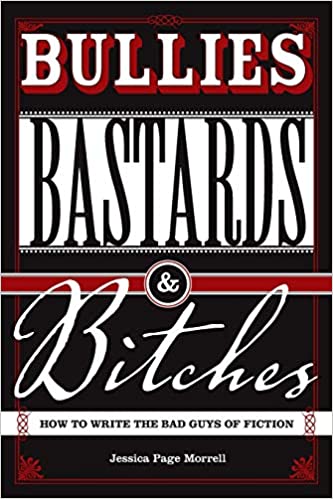
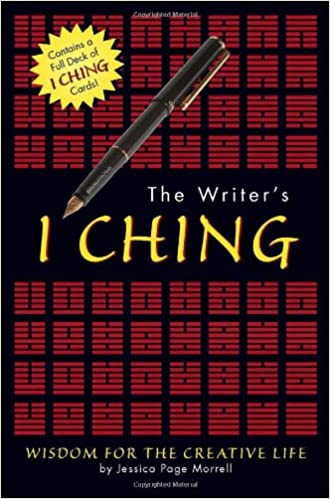
Jessica Morrell  understands both sides of the editorial desk–as an editor and author. She is the author of Thanks, But This Isn’t For Us, A (Sort of) Compassionate Guide to Why Your Writing is Being Rejected; Bullies, Bastards & Bitches, How to Write the Bad Guys in Fiction; The Writer’s I Ching: Wisdom for the Creative Life; Voices from the Street; Between the Lines:Master The Subtle Elements Of Fiction Writing; and Writing Out the Storm. She works as a developmental editor, is a columnist and  is a popular speaker and teacher at  writers’ conferences.

 Deborah Reed is the author of the novel, Carry Yourself Back to Me, a Best Book of 2011 Amazon Editors’ Pick. She is also the author of the bestselling thriller, A Small Fortune and its sequel, Fortune’s Deadly Descent, written under the pen name, Audrey Braun. All three novels have been translated or are forthcoming in German. Her next literary novel, Things We Set On Fire will be published in fall 2013. Her nonfiction work has appeared in The Literarian, More, The Nervous Breakdown, and elsewhere. She has been a frequent guest on syndicated radio, including NPR’s On The Media, and The Law Business Insider. She and her novels have twice been featured on ABC television’s AM Northwest. Deborah holds a Masters in Fine Arts in Creative Writing, and teaches at workshops and conferences around the United States and in Europe. She lives in Portland, Oregon.

Gigi Rosenberg is an author and coach to visual, literary and performing artists. She wrote The Artist’s Guide to Grant Writing (Watson-Guptill, 2010), now in its second printing, to teach writers and artists how to write kick-ass grant proposals. Her writing has been published by Seal Press, The Oregonian, Parenting and The Jewish Review, performed at Seattle’s On The Boards and broadcast on Oregon Public Radio. Visit www.gigirosenberg.com.

Kevin Sampsell is the editor of Portland Noir (Akashic) and the author of the story collection, Creamy Bullets (Chiasmus). His memoir, A Common Pornography, was published in 2010 by Harper Perennial. Harper’s Magazine called it ”a rather miraculous act of artistic self-creation…his story alone is an adequate metaphor for itself, the life it describes, and its hard-won pleasures.” It was also called one of the “best unexpected books of 2010″ by Time Out Chicago.

He has worked at Powell’s Books as an events coordinator and the head of the small press section for fifteen years. His essays have appeared recently in Salon, The Faster Times, and The Good Men Project. He lives in Portland, Oregon with his wife and son, and recently sold a novel, This is Between Us to Tin House Books.

 Lidia Yuknavtich is the author of The Chronology of Water, the novel Dora: A Headcase, as well as three books of short stories and a critical book on war and narrative. Her work has appeared in The Sun, Ms, The Iowa Review, Zyzzyva, The Rumpus, BOMB, and elsewhere. She is the recipient of an Oregon Book Award, a Pacific Northwest Bookseller’s Award, and grants from Poet’s and Writers, Literary Arts Inc., and Oregon Literary Arts. She lives and teaches in Oregon and is the creator of chiasmus press. Visit Lidia at lidiayuknavitch.net

“Dora: A Headcase is … dirty, sexy, rude, smart, soulful, fresh and risky. Think of your favorite out-there genius writer; multiply by ten, add a big heart, a poet’s ear, and a bad girl’s courage, and you’ve got Lidia Yuknavitch. ~Karen Karbo, How Georgia Became O’Keeffe

~~~~~~~~~~~~~~~~~~~~~~~~~~~~~~~~~~~~~~~~~~~~~~~~~~~~~~~~


Fall 2012 Workshops and Sessions

 with Jessica Morrell


Deep Fiction: The Anchor Scenes

October 20 Manzanita, Oregon

9-5, Cost: $80

The task of a novelist or memoirist is to tell a story so riveting that it will hold a reader’s attention for hundreds of pages. This requires intimate knowledge of characters , their inner lives and central dilemma. It also requires a knowledge of plotting—the sequence of events that bring readers through the story. After your rough draft comes nailing the structure—the essential scenes that every novel needs to create drive, tension, conflict, climax, and resolution.  We’ll pay special attention to plot points and reversals that star the protagonist and power stories forward. By the end of the workshop participants will have outlined these crucial scenes and know where flashbacks should be placed to deliver the most potency.  Story maps provided as part of the comprehensive handouts.


November 10, Portland, OR

Line by Line: How to Rewrite, Rework & Reword

Every good writer is also an editor. The tough thing about self-editing is learning what to keep, what to lose, and what to leave well enough alone. This can be difficult because writers are extremely close to their work and sometimes read what they meant to write, not what’s actually on the page.  This workshop will give you perspective on all that. We’ll cover the all-important level of line editing—or how to make each sentence and paragraph sing, how to choose words for potency and resonance, and how to transform clunky sentences and paragraphs into smooth beauties. You’ll learn how to tighten baggy sentences, turn weak verbs into strong ones, and use parallel construction. We’ll be line editing examples throughout the workshop including the participants’ first paragraphs since everything hinges on them. Our aim is polish and pages that are not only easy to read, but a pleasure to read. $75

Looking ahead:

January 26, 2013

Making It in Changing Times Mini Conference

With Keynote speaker Lidia Yuknavitch

Portland, Oregon

 June 21-23, 2013

Summer in Words Writing Conference

Hallmark Inn & Resort, Cannon Beach, Oregon

Keynote speaker to be announced soon.

Space is for every workshop is limited and payment and is required to register. Payments can be made by check or through PayPal using Contact me at jessicapage (at) spiritone (dot) com


Update:

My next workshops will be at my Summer in Words Writing  Conference on June 15 & June 17th. Go here for the schedule.
I will also be teaching at the Willamette Writers Conference in August. Go here for the schedule.
My teaching schedule resumes in the fall with an appearance at Southern Branch of the Willamette Writers on September 8, Central Point, Oregon.
Dates for Planet Published Mini-Conference will be October 19th &20th. Stay tuned for details. This conference will be taking place in southern Oregon near Ashland.
I lead small critique groups three times a year. Limited to 4 participants. These will also resume in early October.  I also teach in Manzanita, Oregon several times a year. Dates and topics will be posted in the coming months.
I’m available to speak to writer’s groups and organizations. Contact me at jessicapage(at) spiritone(dot) com.

File under Kudos:

Just wanted to mention, Jessica, how much I loved the four workshops you presented here at the Tallahassee Writers’ Conference. You’re the whole reason I came all this way from Canada for this conference. I learned so much about writing and editing from your  book, Thanks, But This Isn’t For Us, that I leapt at the chance to meet you and get more of your wisdom first-hand.
I came to the  conference with high expectations, and your workshops exceeded them by far. You’re very generous about sharing your insightful, right-on advice on what does and doesn’t work to create engaging, compelling fiction. I went away stimulated and excited — okay, pretty much exhausted by the end of the last one! But I  got my money’s  worth  and so much more, and you’ve  inspired  me in  so many ways.
And it was great meeting you, too!
Thanks, and I hope we can keep in touch.
Warm regards,
Jodie Smile

Jodie Renner, M.A.
Jodie Renner Editing
Website: www.JodieRennerEditing.com
Copy editor for eatdrink magazine
Jodie’s blog on tips for writers: Jodie Renner Editing. Also, these blogs: Crime Fiction Collective, The Thrill Begins, Blood-Red Pencil, The Writer’s Forensics Blog, and Suspense Magazine’s blog.
Facebook: Jodie Renner Editing
Twitter: @JodieRennerEd
Member: International Thriller Writers (Associate), Sisters in Crime (SinC), Publetariat.com, Backspace, Savvy Authors.

 Making It in Tough & Changing Times

A Mini Writing Conference

January 28th, Portland, Oregon

At last, a practical one-day conference filled with just the information that you need to propel your writing career to the next level and muscle your way to publication.  We’ll cover everything from creating potent sentences and writing irresistible query letters, to writing killer openers and making it as a writer in a media-saturated world.

Time: 8:30-5:30

Cost: $99 Includes Continental breakfast, catered lunch, workshops and keynote address by author Christina Katz.

Location: Tabor Space, 5441 S.E. Belmont , Portland, Oregon

8:30  Registration, Continental Breakfast  8:45 Introductory Remarks: So What do you Mean Writing is a Life? Jessica Morrell

9:00  One Strong Sentence After Another, Monica Drake  Editor Gordon Lisch famously said that good writing is a matter of one strong sentence after another. In this craft workshop we’ll examine techniques that build muscle and cut the fat in each sentence. Participants may join at any level of experience. They’ll leave with examples and ideas to improve their own work quickly. This may be applied to any genre of literary fiction and nonfiction.

10:30  Killer Openers, Jessica Morrell

 All writing lives and dies by the opening lines. The opening paragraphs have a huge job — to hook the reader. We’ll discuss how killer openers immediately set the tone of the story, raise questions that require answers, and hit the reader square between the eyes often by being surprising or shocking. Of course we’ll also talk about how not to kill openings with common blunders and missteps.  If you want readers and to sell to editors, this workshop is for you.

12:00 Keynote: The Prosperous Writer: Tips For Navigating The Gig Economy, Christina Katz 

Writing well, closing sales, narrowing your focus, continuous learning, and a career-long willingness to self-promote—these are the five qualities of prosperous writers. But how will you sustain your creative productivity and juggle all of these skills at once? These are the creative productivity secrets that most writers rarely share. Myths will be busted. Truths will be bared.

1:00  Anatomy of a Scene, Jessica Morrell

Scenes are the basic units of storytelling. They dramatize everyday life and highlight key moments. In scenes something significant happens that has not happened before and will not happen again. Every scene brings the story to a new place in the narrative, and offers something fresh to stir readers’ emotions.  Scenes are the intimate moments in the story that create emotional involvement with the reader.

2:15  Paring it Down to the Truth, Emily Whitman

“Make every word count.” You hear it all the time, but how do you do it? Whether you tend to write long and then slash, or pithy and then add, you need to cut the dross in that final draft. Paring it down doesn’t always mean cutting it short: pacing and rhythm matter. Years of writing educational passages with strict word limits have taught Emily a thing or two about trimming down to the essentials. This workshop will teach you the tricks and tools at your disposal, from the concrete to the conceptual.

3:30  What Editors Want , Adam O’Connor Rodriguez

An editor will discuss query letters, cover letters, and manuscript presentation. He’ll reveal what editors love to see in a submission and what they hate to see. Workshop participants are encouraged to submit their query letters and before hand for insightful feedback. Adam will also answer questions about the submission process.

4:40  Panel/Q & A: Risk It To Get Published with Christina Katz, Jessica Morrell, and Adam O’Connor Rodriguez

5:15  Book signing, Closing remarks.

To register: Contact Jessica Morrell at jessicapage(at)spirtone (dot)com

Space is limited. Early registration is recommended. Payments can be made by check or through Paypal. Mailing address is: Jessica Morrell, P.O. Box 820141, Portland, OR 97282-114.1


Fall Workshops and Sessions

 Story writing Intensive

 September 21-24

Manzanita, Oregon
Story Writing Intensive is open to writers serious about getting published. Our days and nights will be packed with one-on-one meetings, feedback sessions, lectures, and time to work on manuscripts (and walk on the beach).   Enrollment for this Intensive is limited to no more than 12 participants and is by application only. Those who wish to attend must register with a (refundable) $100 deposit and submit the first 4 pages (1000-1200 words) of a manuscript (short story, novel, memoir) and you’ll provided writing samples to all attendees. Tuition includes one catered lunch. Beverages and snacks will be provided and we will gather for a potluck dinner on Wednesday, September 21. The deadline for submitting writing samples is September 10.   Expect a focus on:

  • The velocity of your opening page
  • Achieving momentum in your first chapter
  • Character arc
  • Your protagonist’s defining moment
  • Creating tension and suspense
  • Creating  unforgettable characters
  • Making readers care
  • Writing dialogue that sizzles
  • Pacing, pacing, pacing
  • Plot versus story
  • Levels of refinement

Fiction Critique Groups begin October 3

Southeast Portland—location to be announced

Group 1: Mondays 12:30-4 p.m.

Group 2: Tuesdays, 6-9:30 p.m. Limited to 5 participants Cost: $290

Getting a novel published can be daunting, so here’s a bit of help: a nine-week critique group led by a developmental editor. Work with a small group of like-minded writers and receive helpful and insightful feedback, support and instruction. This approach is recommended for writers who have completed a first draft written.  A writing sample is required for registration.

 The Final Edit

October 22, 10:00-5:00 Cost: $80

Eugene, Oregon

First comes the blank page and how to fill it, then comes the written page and how to fix it. Most often it is in the revision process that the real writing gets done. This workshop offers suggestions on how to be your own editor, concentrating on readying a fiction or memoir manuscript for submission. We’ll focus on the three stages of revision: First Revision: Look at the big picture and analyze the overall coherence, structure and plausibility. Second revision: In this pass-through make the story seamless. Fine tune pacing, scenes, and the ending and track character development and arc. Final Revision: Think like a copy editor. Your aim is to correct language, style, and hone in on detail. The final draft is also for making certain there is tension throughout.   We’ll discuss what editors notice and reject in manuscripts. Generous handouts will be provided including revision checklists  to help writers reconsider and enhance final drafts.

 The Power of Voice

October 29, 10-5, 10 a.m-5 p.m.

5441 S.E. Belmont,  Cost: $75

After your title, the first thing an editor or agent notices is the voice of your story, manuscript, or proposal. Voice is the breath of the writer or, in the case of fiction, contains the power and personality of the story or narrator. And editors fall in (or out of) love with a compelling voice. Since stories and essays announce themselves through voice this workshop covers everything you want to know about voice how to create an authentic voice in fiction and nonfiction. We’ll also discuss how to create introspection, close voice, distant voice (for delivering information) creating emotional atmosphere through voice, and how voice stems from a character’s socio-economic background. We’ll also discuss how voice and viewpoint connect to bring readers into a story. During our session we’ll dissect powerful examples in fiction and nonfiction, brainstorm ways to make voice sound authentic, and generate story beginnings during our session. Ideal for both the novice writer and those seeking an engaging refresher, a one-day intensive is a great way to energize your writing.

 Writing a Book That Makes a Difference

November 6, 5441 S.E. Belmont

10-5 Cost: $75

EVERY WRITER HAS A BOOK HE needs to write– the one that has been keeping him up nights, invading his dreams, teasing him with scraps of scene, dialogue, fact, invention, idea, image, memory. The book that in some way speaks profoundly to the core of his beliefs, the emotional and spiritual and intellectual center of his life. The book that will take the best that is in him and every bit of craft he can muster. The Big Book.“  ~ Philip Gerard

This workshop reveals how to write a book that stems from our deepest passions, ideas, and concerns. We’ll discuss how our books can touch a reader’s imagination, life, and heart.  A wide range of examples from various genres and exercises will illustrate the discussion and a reading list and generous handouts will be supplied.

All classes and workshops include generous handouts and practical, usable information that you can immediately put to use. Please feel free to forward  this to anyone you think might be interested. All events require pre-registration and payment. Space is limited, so you’re encouraged to register early.

Looking ahead:  

<January 28, 2012>

Making It in Tough & Changing Times Mini-Conference, Portland, Oregon

<June 15-17, 2012>

Summer in Words Writing Conference

Resonance & Refinement 

Hallmark Inn & Resort, Cannon Beach, Oregon


June 24-26 2011, Summer in Words, Cannon Beach, Oregon

August 5-7 Willamette Writers Conference, Portland, OR

September 21-24, Writing Retreat, Manzanita, Oregon

October 22, The Final Edit, Eugene, Oregon

November 6 &7 Story Boot camp, Las Vegas, NV