In the Eskimo language the words for to breathe and to make a poem are the same. Remembering this has been wildly helpful to me. It means a freeness to plunge in, almost like doing a finger painting. It’s a free flow, suspending fact, meaning, sanity, then seeing, in what pours out uncensored, what can be shaped, fashioned, pared down or enlarged to become a poem. ~ Lyn Lifshin
Words are All We Have
Written By: Jessica Morrell
-
Jun•
03•18

Margaret Atwood says,
Written By: Jessica Morrell
-
May•
30•18
 “Writing has to do with darkness, and a desire or perhaps a compulsion to enter it, and, with luck, to illuminate it, and to bring something back out into the light.” ~ Margaret Atwood , Negotiating With the Dead
If you’re an Atwood fan, here’s a thoughtful interview you might enjoy.
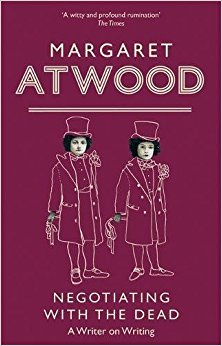 And here’s information on her book about writing, Negotiating With the Dead. And a link to amazon
Keep writing, keep dreaming, have heart
Tip for action scenes: read screenplays
Written By: Jessica Morrell
-
May•
24•18
I’ve coordinated a number of writing conferences and hosted best-selling and about-to-breakout authors as my keynote speakers. A few years back, above the sparkling Pacific the prolific and talented Chelsea Cain talked to writers about what she’d learned from writing bestsellers. One piece of her advice always stuck with me: Write the bare bones version of the scene first using mostly dialogue, then move on and in the second draft flesh out the scenes with description and action. In other words, an early draft might look more like a screenplay than a novel.
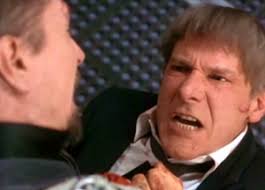 Fiction and memoir writers need to be omnivorous–searching out classics and bestsellers, prizewinners and Goodreads favorites–reading widely, and analyzing with an eye for structure and arcs. And they need to analyze movies and read screenplays for storytelling techniques. All screenplays reveal the underlying acts and key events and there’s a lot to be learned from what screenwriters leave out.
Below I’ve pasted the opening or set up in the thriller Air Force One written by Andrew Marlow. If you write action or thriller novels, what did this story teach you? For example, notice how the protagonist has a lot to lose. Air Force One is hijacked while the president and the first family are on board. Smart writers insert sky-high stakes by using vulnerable characters and complicated motives. In the opening, the president makes comments about not bargaining with terrorists. And the first two acts set up a deadly showdown and memorable dialogue “Get off my plane.”
You can find thousands of screenplays online. Here’s a good resource for screenplays and another.
Like most action films, Air Force One begins without prelude:
                   Air Force One

                   Andrew Marlow

FADE IN:
INT. C-130 HERCULES TURBO-PROP - NIGHT

Eighteen combat-ready special forces, wearing
assault black, jump packs and combat gear,stare down
the deep end of a greasy ramp into the night sky.
Village lights flicker 19,000 feet below.

The STRIKE FORCE LEADER signals to his team.

Without a moment's hesitation, they dive into the
darkness and plummet toward earth.

EXT. MANSION - NIGHT

A military GUARD, old Soviet-style uniform,rounds
the corner of the large estate toting an AK-47.

A red laser dot appears briefly on his forehead and
after a beat, the red dot seems to bleed.The Guard
collapses dead.Two other GUARDS are dispatched with
single, silenced shots.

A Strike Team member at a junction box awaits a signal.

Through infra-red binoculars the strike Force Leader
watches his assault troops as they take positions.

                    STRIKE FORCE LEADER
            (into headset/in Russian)                              Russian)
                         GO!

On the estate - as the power goes out.The team on the
mansion's front porch pops the door and pours in.

INT. MANSION - NIGHT

FOLLOWING - the FIVE TEAM MEMBERS as they rush a
stairway in phalanx formation. They nearly knock
over an old lady, who in turn lets out a blood
curdling scream.

UPSTAIRS CORRIDOR -

The team kicks open a door.  Rushes into the room.

INT. BEDROOM -

Assault weapons pointed at the bed. The soldiers
yank back bedsheets to reveal IVAN STRAVANAVITCH, a
middle-aged man and his half-naked 18-year-old
concubine.

                     SOLDIER
                   (in Russian)
                  Get up, now!  Up!

The soldiers pull Stravanavitch to his feet and haul
him out of the room.

FOLLOWING -  As they push down the hallway.

MANSION SECURITY GUARDS rally with haphazard gunfire.

Out come the strike force's flash-bang grenades.
Exploding everywhere, disorienting Stravanavitch's
men.

EXT. FIELD - NIGHT

Signal flares burn as a helicopter descends on the
position. The Strike Team evacuates across the field
and forces a struggling Stravanavitch into the low-
hovering copter.

The commandos swiftly board the craft as a handful of
Stravanavitch's guards break into the clearing.They
open fire.

And the mounted machine guns on the helicopter
return.

One of the Strike Team members takes a bullet to the
neck. He's pulled by his comrades into the chopper as
it lifts into the sky, its guns spitting lead...

               STRIKE FORCE LEADER (V.0.)

              Archangel, this is Restitution.

              Archangel, this is Restitution.The
              package is wrapped.
              Over.

                   VOICE (V.0. RADIO)
              Roger, Restitution.  We are standing
              by for delivery.

                  FADE TO BLACK
The SOUNDS of a dinner banquet.
Forks clanking against plates and
the din of a hundred conversations,
broken by...

The DING, DING, DING of a SPOON tapping against a wine glass.
SUPER TITLE:   "MOSCOW - THREE WEEKS LATER
FADE IN:

INT. BANQUET ROOM - NIGHT

Hundreds of men and women in formal evening wear sit
at round banquet tables. A HUSH falls over the guests
as the DINGING continues.  All attention turns to the
front table.

A rotund, silver haired-man in his late sixties
rises and sidles past U.S.and Russian flags up to the podium
microphone.  He is STOLI PETROV, President of Russia.

                          PETROV
                       (in Russian)
          Thank you for joining us this evening.

          Petrov's harsh Russian issues through the
          room.  But over it we hear a young woman's
          voice translating.

                     TRANSLATOR (V.0.)
          Tonight we are honored to have with
          us a man of remarkable courage, who,
          despite strong international
          criticism...

AT THE FRONT TABLE -

A translator's words ring in the earpiece of a
handsome man in his mid-forties.  Worry lines crease
his forehead and the touch of gray at his temples
attest to three very difficult years in office.

This man is JAMES MARSHALL, and he is the PRESIDENT of the
UNITED STATES OF AMERICA.  He busily makes last
minute changes to his speech.

                      TRANSLATOR
                    (V.0. earpiece)
           Has chosen to join our fight against
           tyranny in forging a new world
           community.  Ladies and gentlemen, I
           give you the President of the United
           States of America...

           Mr. President.

Thunderous applause as Marshall rises and approaches
the podium.

At the back of the room, DOHERTY, a senior policy
adviser whispers to the President's Chief of Staff
ED SHEPHERD...

                           DOHERTY
             Maybe we should consider running him
             for re-election instead of the U.S.
The applause dies as Marshall begins to speak.

                         MARSHALL
               (in Russian with subtitles)
             Good evening and thank you.  First I
             would ask you to join me in a moment
             of silence for the victims of the
             Turkmenistan massacres.

The room remains silent a few beats.  Most guests
respectfully bow their heads.

Marshall begins again, but this time in English. The young
woman translates simultaneously for the Russian audience.

                      MARSHALL
          As you know, three weeks ago American
          Special Forces, in cooperation with
          the Russian Republican Army, secured
          the arrest of Turkmenistan's self-
          proclaimed dictator, General Ivan
          Stravanavitch, whose brutal sadistic
          reign had given new meaning to the
          word horror.  I am proud to say our
          operation was a success.

Applause from the audience.  Marshall turns the page
on his speech.

                      MARSHALL
          And now, yesterday's biggest threat
          to world peace... today awaits trial
          for crimes against humanity.

During the applause, Marshall pulls a page from the
speech, folds it and slides it into his pocket.  He
removes his glasses and looks out into the crowd.
His tone becomes more personal.

He's not reciting the speech anymore.

                        MARSHALL
           What we did here was important.  We
           finally pulled our heads out of the
           sand, we finally stood up to the
           brutality and said "We've had enough.
           Every time we ignore these atrocities--
           the rapes, the death squads, the
           genocides- every time we negotiate
           with these, these thugs to keep them
           out of gig country and away from gig
           families, every time we do this
           we legitimize terror.

           Terror is not a legitimate system of
           government.  And to those who commit the
           atrocities I say, we will no longer
           tolerate, we will no longer negotiate, and we will no longer
           be afraid.  It's your turn to be afraid.

Applause rolls through the crowd.

EXT. MOSCOW INTERNATIONAL AIRPORT - NIGHT

Sprawling terminals spread out to runways like
tentacles.

ON THE TARMAC -

Bathed in floodlights, perched majestically on the
runway, dwarfing nearby commuter and military jets,
stands...

                        AIR FORCE ONE
         The President's own Boeing 747-200,
         dubbed "the flying White House".
         The distinctive royal blue stripe
         over a thin gold line tapers to a
         tail adorned with the American flag
         and the Presidential Seal Secret
         Service agents and Marines stand
         guard at the aircraft's perimeter.

A RUSSIAN NEWS VAN emerges from the darkness and
pulls to a stop by a Secret Service barricade.

         SPECIAL AGENT GIBBS greets the Russian news
         team that emerges.

                          GIBBS
          Gentlemen, welcome to Air Force One.

          Please present your equipment to Special
          Walters for inspection.

 The news team's segment producer, a crusty old
 Russian named KORSHUNOV raises his big bushy eyebrows.

                     KORSHUNOV
           We've already been inspected.

                     GIBBS
          Sir, this plane carries the President
                         of the United States.

         Though we wish to extend your press service
         every courtesy, you will comply with our
         security measures to the letter.

                          KORSHUNOV
         Of course.  I'm sorry.

Korshunov and the FIVE MEMBERS of his news crew
present their video cameras, sound equipment and
supplies to Special Agent WALTERS for inspection.
Secret Service DOGS sniff through the baggage.

                            GIBBS
            Please place your thumbs on the ID
            pad.

Korshunov puts his thumb on the ID pad of a portable
computer.

The computer matches up his thumbprint with his
dossier and photograph. "CLEARED" flashes on the
computer screen.


INT. HALLWAY - NIGHT

The President, walking with his entourage.

                      SHEPHERD
           CBS said they'll
           give us four minutes.  They thought
           the Russian was a nice touch.

                      MARSHALL
           I always wondered if my freshman
           Russian class would come in handy.

                      DOHERTY
           Sir, you threw out page two.

                      MARSHALL
           Goddamn right I did.  I asked for a
           tough-as-nails speech and you gave
           me diplomatic bullshit.  What's the
           point in having a speech if I have
           to ad-lib?

                       DOHERTY
           It was a good ad-lib, sir.

                       MARSHALL
           Thanks.  Wrote it last night.

The President exits the building and enters his
limousine.

EXT. TARMAC - AIR FORCE ONE - NIGHT

Walters hands the bags back to the Russians.

                   WALTERS
          Equipment checks out.

A striking woman in her early thirties descends Air
Force One's stairway.  MARIA MITCHELL.

                        GIBBS
          Gentlemen, this is Maria Mitchell.

          Press Relations for the Presidential Flight Office.  She'll
          take you from here.

                      KORSHUNOV
          Ms.  Mitchell.  So nice to finally
          meet you in person.

                    MITCHELL
          The President and I were delighted
          that we could accommodate you.  Now
          if you're all cleared?
                   (Gibbs nods)
          You can follow me then.

They ascend into the belly of Air Force One.

                    MITCHELL
          I'll be giving
          you a brief tour, then during the
          flight, two members of your crew
          will be allowed out of the press
          area at a time for filming.  You
          will have exactly ten minutes with
          the President and twenty with the
          crew...
that ethereal moment…
Written By: Jessica Morrell
-
May•
16•18
Writers and artists know that ethereal moment, when just one fleeting something–a chill, an echo, the click of a lamp, a question–ignites the flame of an entire work that blazes suddenly into consciousness. ~ Nadine C. Keels
Writing consoles
Written By: Jessica Morrell
-
May•
08•18
Rhythm, repetition, making patterns–these are not only important devices for shaping the strange and abstract instrument/object we call a poem or story, but they are craved as well because of our primordial need for reassurance, the sense of security we get from moving over the known. A mystery doesn’t lose power in revisiting. Writing is not just to know, it is also to console. We need to be reminded that we are part of the obscure rhythm of birth and decade. It is the humming that matters. ~ Breyten Breytenbach
Writing a Potent Action Scene
Written By: Jessica Morrell
-
May•
04•18
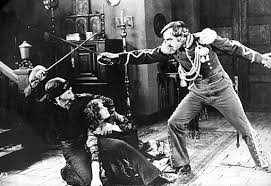
Action is eloquence. William Shakespeare, Coriolanus
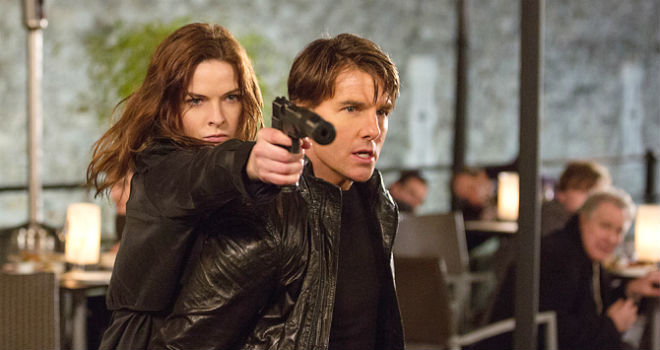
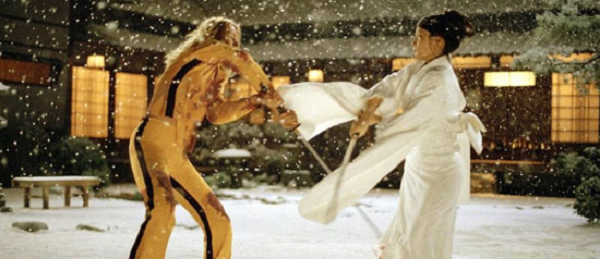
There are a few techniques it seems like I’m always passing on to my clients: amp up your verbs; use language and details to create more tension; and force scenes to rise. By rise I mean writers need to thrust the drama level to a crisis, a confrontation, an explosion. Because in most scenes you’re aiming for the worst outcome. But if you’ve been writing awhile, you know that action scenes don’t come easy. I’ve got some ideas for you.
Components of an action scene:
| Characters | The main players in the scene with their key traits visible & engaged. Secondary characters need a reason for being. |
| Setting | The time, place and context in which the scene takes place. Setting is not a backdrop, stage action scenes for maximum wattage. |
| Scene driver: Inciting event/change/threat | The event/stimulus/threat that starts the action rolling in the scene (action can be precipitated before the scene begins) |
| Internal response
External response
|
How the main characters react emotionally to actions, threat, choice.
How the main characters react physically–dialogue, movement, escape, confrontation, fisticuffs. Typically there is a second driver (event or response)that starts the action. |
| Goal | What the main character decides to do as a reaction to the inciting event or threat. |
| Consequence | How the main character struggles to accomplish the goal. |
| Resolution | How the scene goal turns out–win, lose, draw, escape, disaster. |
- Three words to write by: cause and effect.
- Action scenes are high stakes.
- The action needs to build to a full boil crisis.
- Whenever possible structure action scenes with a midpoint which is also a reversal.
- Use all your tools to create a character’s emotional responses including, subtext, posture, facial expressions, gestures, mannerisms, eye movements, and voice quality. Voice includes pitch, rate of speech (does the character talk fast when nervous?), intonation.
- As you write, imagine you’re holding a camera catching the action blow-by-blow.
- With intense action, use short sentences to pick up the pace. Action scenes usually have a minimal amount of description unless it contributes to the scene. The scent of blood. The sound of a gun cocking, or the creak of a floor board. This is not the place for describing the scenery or the characters.
- Action scenes feature choppy and incomplete sentences. Such as, “What was that noise?” “What the . . .”
- If the setting is complex and the action intricate, sketch out a map. Place coins or placeholders to mark your players, define the sight lines, scene’s boundaries (how far can a character reach?), and how long it might take to walk, run (or sneak) from point A to point B.
- If the action is complicated, ask friends or family members to act it out so you can verify the sequence and reactions.
- Read your dialogue out loud.
- Use simple past tense verbs such as “kicked” or “punched” rather than those pesky ‘ing’ participles such as “kicking” or “punching.”
- Your protagonist has skills, strengths, and weaknesses you
 can exploit and showcase. Foreshadow those traits throughout the story so when the reader reaches the action scene, he is expecting complications and credibility.
 - Scenes are never random events—they all need a logical connection to the story line and to create ramifications.
- Pay special attention to endings—they need weight, potency, and to reveal consequences.
- Pacing is key, but is also controlled by the scenes that come before and after. These will typically be slower to set up and react to the fight.
- When writing fight scenes or violence, pack these scenes with an emotional punch too.
- Read screenplays to digest the moment-to-moment breakdowns.
- When you watch films study the reaction shots.
- Some emotions in an action scene will be brief or fleeting.
 When a gunshot is fired nobody has time to think. However, the body’s chemistry shifts to handle lethal threats, allowing the brain to process far more information in a shorter period of time.
- Keep in mind that action scenes happen at several levels and much of the fight needs to be about internal changes, the inner world of protagonist.
- During revisions fine tune character’s emotional reactions so they’re unique, fresh, and individual. This aspect of revision is crucial, but sometimes difficult.
- Make certain you can justify carnage and bloodshed.
- Don’t bog down the sequence with too much technical description. Show who has the upper hand, rack up the tension to the nines, and tap into the motivations of the character readers root for. And if someone gets punched or shot or knocked to the ground, readers should feel it too.
- Utilize all the senses and never rely solely on physical description.
stay tuned for action scene examples