August
Deep PoV is like Method Acting
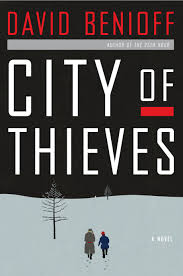
As a writer it’s your job to curate and guide your readers scene by scene through your story. Your narrator or viewpoint character is the conduit or lens through which the reader ‘sees’ the story. Scene building begins with defining the conflict and action of each scene and understanding your viewpoint character’s main feelings/emotions, how these emotions will play out, and how his/her emotions will change by end of scene.I shrugged. I was afraid that if I opened my mouth I would say something mawkish and stupid, or worse, that I would start to cry through a night like this one, and I was convinced that the sniper from Archangel was the only girl I would ever love.
Her gloved hand still rested on my cheek. “Tell me your last name.”
“Beniov.”
“I’ll track you down, Lyova Beniov. All I need is the name.” She leaned forward and kissed me on the lips. Her mouth was cold, her lips rough from the winter wind, and if the mystics are right and we are doomed to repeat our squalid lives ad infinitum, at least I will always return to that kiss.
an actor slips into character. Like an actor preps for the scene, memorizing his lines, imagining it moment by moment, then dredging up memories in order to transform into his character.
“To open our eyes, to see with our inner fire and light, is what saves us. Even if it makes us vulnerable. Opening the eyes is the job of storytellers, witnesses, and the keepers of accounts. The stories we know and tell are reservoirs of light and fire that brighten and illuminate the darkness of human night, the unseen.” – Linda Hogan
beyond the fields we know
“In the greatest confusion there is still an open channel to the soul. It may be difficult to find because by midlife it is overgrown and some of the wildest thickets that surround it grow out of what we describe as our education. But the channel is always there, and it is our business to keep it open, to have access to the deepest part of ourselves.”
— Saul Bellow
A Conflict-laden Plot Pattern that Works
Want a shorthand formula for a successful story? Start with a heroic protagonist who is sane and moral, but, of course, flawed. Then create the world he or she operates in as crazy, chaotic, askew. Stir in antagonists who are immoral. Create conflict that’s essentially a test. Mix in at least a few sympathetic supporting characters for readers to root for. Better yet, make as endearing and quirky as hobbits.
This archetype works on many levels and can be shaped into so many patterns. It can be written as a quest, a battle between good and evil, or survival in a Wasteland. It’s often adopted in dystopian fiction, particularly sci fi or fantasy stories aimed at YA readers. A dystopian story features a world that’s the opposite of rational, humane, and functioning society. Usually an event like a massive-scale war, a pandemic, or global climate change has shifted society to topsy-turvy.
The Hunger Games is a prime example of this type.
Katniss Everdeen is trying to survive in a world gone mad amid a family and community facing loss and deprivation. One reason the broken world setting works so well is because it naturally creates many levels of antagonism, conflict and danger. This series has it all.
The trick to writing such a scenario is that the protagonist’s existence is tenuous, the future unknowable. Rules make no sense. Who can you trust? What is the truth? Sometimes the old order has crumbled and the new order is shaky and corrupt. Often the corruption is so pervasive that the protagonist and his allies have no choice except to rebel.
Villains play a large role in these narratives exemplified by President Coriolanus Snow, the leader of Panem. He personifies depravity, evil, and power gone mad. The Capital reveals a vapid, numb society of banality, vanity, and ultra-crass consumerism
. The brutal Games force children from the country 12 Districts to fight to the death for the Capital’s entertainment, while reminding the citizens of formerly-rebellious Districts who is in control. The people who govern the Games are also antagonists and the layers of tyranny and oppression are far-reaching.
Now, a justifiable criticism of The Hunger Games series is that it’s utterly implausible. A whole country meekly stands by as children slaughter each other? The morality of the Games is never questioned in the Capital? Really? Only a handful of moral citizens exist? Survival of the fittest is justified?
The Maze Runner series by James Dashner also capitalizes on a dystopian setting. The kids who end up in the Maze world are essentially experiments of the laboratory-rat variety, only on a much larger scale. Heroic characters, check. Chaotic, ruined world, check. Villains galore, check. Nobody knows the rules or what the heck is going on, check. These stories often feature gruesome puzzles at their core.
In The Maze Runner Thomas, a teenager, finds himself descending in an elevator without any memory of who he was. When the elevator ‘arrives,’ Thomas is greeted by a group made up entirely of teenage boys.
He learns that the group calls themselves the Gladers, after the Glade in which they are imprisoned. The Glade is surrounded by an ever-shifting Maze, populated by creepy, lethal creatures called Grievers. Thomas wants to escape and so the conflict heats up…. The Gladers eventually escape the Maze and discover that the whole setup was an experiment run by a group calling itself World In Catastrophe: Killzone Experiment Department.
In these crazed worlds, innocents are naturally at risk. Usually the author sacrifices a vulnerable character or three (think Rue in The Hunger Games) to increase heartache and tension (nobody’s safe!).
Since Homer’s Odysseus, wartime as a backdrop for fiction also uses this narrative pattern. Cold Mountain by Charles Frazier comes to mind. After suffering a gunshot to the neck, Inman, the protagonist, decides to leave behind the brutal Civil War battlefields and return to his beloved Ada Monroe and his beloved mountain home. Home is hundreds of miles away and he’s walking despite his injury. Readers understand that war is unpredictable and always includes a body count.
The climax of these stories usually involves gutting the corrupt world and people in power. Eventually Katniss and the rebels overthrow Snow and the leaders of Panem. The Gladers are rescued by rebels and discover that their environs (The Scorch) came about because of The Flare, a deadly virus. Inman’s enemies are vanquished and his wanderings through the war-ravaged countryside reveal horrific realities and the sad dawning of a new reality.
A few suggestions/words of caution:
-
Populate your world with complex characters with complicated motives. It’s too easy to create evil overlords or cartoonish, power-mad dictators. Give your villains plausible backstories so readers know how they came to be.
-
Create dynamic characters who are going to change
over the course of the story. Ada Monroe’s dramatic character arc is a terrific example to follow. She transforms from genteel and helpless minister’s daughter to a steely survivalist. This goes for secondary characters too. -
Strive to create fresh themes. Your readers already realize that power corrupts.
-
Create a highly detailed world. Know exactly how every aspect of your story world works down to what scavengers eat.
-
Beware of creating cannon fodder secondary characters. -
Understand the historical distance for your setting. Star Trek or The Martian couldn’t take place in our century because humans don’t yet have the technology for this level of space travel. Stephen King’s The Stand takes place in the 26th Century after a deadly plague wipes out most of the population. How long would it take for a virus to decimate the population? How many generations could survive a global-wide drought?
-
Although survival is the central question, take care that you don’t create a complete downer. Somehow your story needs to be sprinkled with spots of sunlight.
-
Create helpers to lighten the mood and the protagonist’s plight.
-
Imbue the protagonist with an extra dose of grit and determination.
-
Dystopian YA isn’t known for its plausibility, subtlety and subtext. You can do better.
-
Pile on the hardships. Inman’s infected wound takes time to heal with the help of an old goat herder woman he encounters on his journey. He also suffered starvation, dysentery, capture, betrayal.
-
Plan ahead for the protagonist’s arc. How will he and she transform in ways that make sense? Will he/she end up wiser? Cynical?Will he/she become a leader?
-
If it makes sense for the story, create a parallel spiritual arc for your character. If the story begins with him devastated and broken, will he be redeemed like Inman?
-
Stakes need to be life or death. Always.
-
Don’t use the story as an excuse for social criticism.
-
Plant reversals–lots of them. In Cold Mountain Ada’s father dies. Ruby arrives to help the starving and helpless Ada. Ruby’s estranged father returns to disrupt her new life. Inman is turned in by a moon shiner and then captured. Then narrowly escapes a chain gang after a battle.
-
Don’t be afraid to surround the hero with adversaries. In
Cold Mountain members of the Confederate Home Guard–a militia formed to defend the home front against the Union–are opportunistic, corrupt, and creepy. They also tracked down deserters like Inman. -
If a real war is your story’s backdrop, be sure to cover fresh ground. Make certain that readers learn aspects of the war not always shown such as the deep divides in the South. In Cold Mountain the Home Guard proves how people always profit on war and misery.
Keep writing, keep dreaming, have heart
Abandon Ship! Or why your readers might bail on you.
To name names or not to name names, that is the question? What the heck, the book is called Eeny Meeny by M.J. Aldridge. So far so clever, right?
I recently abandoned this thriller about two-thirds of the way through. I know. It’s a weird place to stop reading. It felt spiteful, but was borne of frustration. A few nights later I skimmed the final chapters because I was still annoyed, but needed to find out if he’d pulled off the ending. I don’t read a lot of thrillers, but sometimes they’re just the chocolate chip cookie you need to balance out life’s broccoli. Or something like that because actually I love broccoli.
Arlidge is a former television writer and the book has glowing, and I mean glowing, reviews. It’s called an international bestseller that “grabs the reader by the throat.” It’s written in short chapters –117 of them—ala James Patterson. The story also introduces a new series character Helen Grace and it fills in a major chunk of her backstory.
It also has a fabulous, gruesome premise, but is burdened by a number of problems that ultimately sink it and make it mediocre. These include: police procedural details that are maddeningly incongruous; lack of depth in the protagonist (although this was partly intentional) and clunky explanations about how the characters are feeling and thinking. A brief and incongruous affair begins and ends, but is never adequately fleshed out. A major character dies, but he’s also paper thin and readers don’t come to know him adequately or feel much when he’s gone.
Back to that premise: It begins when young lovers return to consciousness after being drugged. The first lines are: Sam is asleep. I could kill him now. His face is turned from me—it wouldn’t be hard. Would he stir if I moved? Try to stop me? Or would he just be glad that this nightmare was over?
Turns out they’ve been dumped in a weird, cavernous,
empty space lined in cold tiles. Apparently the van driver who picked them up while they were hitchhiking had dumped them there. No matter how they scream or struggle there is no escape, no one hears them. And here’s the kicker: they’ve been left with a pistol with a single bullet in it. They were also left with a cell phone that has a single message on it: Once one of them is dead the other victim will be freed. And they have no food or water.
Told you it was a great premise. The chapters where the victims are held captive are the best in the novel. I won’t mention who the villain is—readers are given teasing snippets of her backstory throughout the book. She’s finally on stage in the final chapter, but to my mind, not enough and the showdown is melodramatic.
As I already mentioned, there are some plot details that defy credulity. One that had me scratching my head was how you could drug your victims with champagne. I mean it’s corked. And the taste of drugs would be easily discernible. And since this is a procedural all aspects of an investigation (especially when a serial killer is involved) need to be accurate and plausible. They are not. Especially troubling were Grace’s interactions with her co-workers. The medical details about extreme hunger and thirst need bolstering. The victims’ dehydration symptoms are sketchy at best.
Then there’s the small stuff. The author describes Helen Grace as a copper and that term is used exclusively and often to describe police. She’s drives a Kawasaki, but the verb most often used is oddly, bicycling or biking. And no, she’s not a traffic cop, she’s a detective. And no, she doesn’t wear leathers. And though it rains as it should in the south coast of England, she doesn’t get wet and the roads aren’t slippery. The story takes place in Southampton which never quite comes to life, but has a lot of vacant places where a serial killer can imprison victims.
There is far too much telling of emotions as in: Helen paced outside, angry and frustrated.
Because of the quick pace a lot of actions are summarized and evntually the reader longs for a fresher approach and more physical details of the characters. At Sandy’s house, the water cascaded over Hannah, reviving her instantly. The experience should have been soothing, but Hannah was too wired for that. She was full of questions, but her overriding emotion was one of girlish excitement. She had hit the jackpot. She and Sandy had pulled it off.
Oddly, besides improbable plotting, it was probably the clichés and trite expressions scattered throughout the story that annoyed and distracted me the most. To name a few starting on the first page: I rack my brains; she was too far gone for that; a flash of anger; And there it was in a nutshell.His ex-wife swept off her feet by another man—with Mark left out in the cold. Charlie seemed like a nice person and had handled her with kid gloves. At first Peter Brightston had avoided his victim like the plague—Charlie felt her pulse quicken. This was personal. A grandfather who wouldn’t take no for an answer. Cool as a cucumber. Screaming all the time at the top of her lungs.
And sudden and suddenly are used a lot because coppers are suddenly bursting into rooms or screeching off on a chase.
Language is the small stuff according to many. But if I’m turned off as a reader, others will be too.
Here’s my point in criticizing this author (and his editor): The mistakes that ended up in this published novel are the same sort that I see in my clients’ manuscripts. But we fix them. Alridge and his editor didn’t correct these blunders. I find this baffling. I often spend hours researching as I edit manuscripts, especially when accuracy is essential such as in thrillers, crime novels, procedurals.
And if you take more care than Arlidge, then his success should fill you with hope.
Finally, this author has lots of promise. If he can work with a persnickety editor, emulate Patterson less, and craft better sentences his career could be stellar.
Keep writing, keep dreaming, have heart
Advice to Writers: Quit Whining
There’s a lot of whining among writers. I’ve never quite seen the like among other groups; say among plumbers or glass blowers or dentists. We seem to believe that kvetching is part of the writing lifestyle.
We think wrong.
And heaven knows there’s a lot of procrastinating and wasting time. Not to mention all the precious hours we spend yakking about the writing, rather than doing the writing.
You need to adopt a pragmatic, problem-management frame of mind. You need to freaking get it. You need to be feet-on-the ground practical and the architect of habits that put words on the page and makes your goals a reality. Stop whining to other writers about how things aren’t going well or how the deck is stacked against you.
Close down this crazy circus that is populating your head and move on.
Writing is a job, plain and simple.
And since we realize it’s a job, not a dance among celestial bodies, roll up your proverbial sleeves and get down to it.
You also need to face the reality that some days of writing are going to pretty much suck. In fact, I can guarantee these days of suckiness will happen, just as sometimes your stories will go nowhere and you cannot for the life of you stop using adverbs and making typos and geeky amateurish mistakes that make it look like a drunken chimpanzee seized control of your keyboard.
Sometimes your drafts won’t work out because you don’t yet possess the techniques or skills to bring it to fruition. Learn those techniques. Everybody’s work hits snags from time to time. Sometimes you discover that the idea or story that seemed perfectly clear in your head is, in fact, an incoherent mess on paper. If you want to, then you’ll find a way around these snags, and sometimes even enjoy circumventing them. You might need to backtrack, dig deeper into your themes, or come to know your character better.
Because writing and accessing words is not moonbeams and magic, and it’s certainly not accomplished by wand-waving ease. In fact, ease and writing probably don’t belong in the same sentence.
And don’t freak out along the way. Face head on the big, messy emotions that crop up while writing.
Because writing can transform a wisp of an idea or remembrance
into a complex, fully-imagined tale which when you think about it, is pretty amazing. And it can transport you from the slog of daily life. It can become lasting and true, especially in a hurry-up and noisy world.
Writing and storytelling are an ancient magic, a tangible magic. So stop the pity, the angst and just get on with it.
Keep writing, keep dreaming, have heart