Word by Word

Practical insights for writers from Jessica P Morrell

Leaving Home, Portals and Thresholds

Written By: Jessica Morrell - Aug• 24•24

After a fabulous thunderstorm last weekend, the weather quieted and more  rain arrived, a rarity in August. Be still my grateful heart. I’ve even kept my windows open all day a few times. I’m gardening in the mornings and battling moles–and if  I might add, they are worthy adversaries.

During the last heat wave I drove into Portland twice in the same day–in the morning for a lovely breakfast and hangout with a former neighbor who is heading off to her freshman year in college. Since she’s an athlete she enrolled early and among many topics we covered, we talked about keeping a toolbox of coping mechanisms handy in case she feels overwhelmed, stuck,  or scared. Because transitions can be tough. And leaving home can be scary as many of us know.

If you write fiction, you’re often penning a tale about a character who is somehow leaving home. Or crossing through a fateful threshold early in the story whereafter life is vastly different.  It’s an iconic literary device dramatically employed in fantasy fiction such as The Chronicles of Narnia series or the Harry Potter books where the main characters are whisked to the Hogwarts School of Witchcraft and Wizardry. But thresholds are used in all genres because story people need to enter into new physical and emotional territory in order to meet obstacles, overcome demons–some from within–and grow.

Thresholds or portals can be the starting point for a quest, take  many forms, and sometimes feature a barrier such as crossing a river, or a country’s border, descending below the earth, soaring into the heavens, or climbing a mountain. Journeys are often featured with long-ago  travels such as Larry McMurtry’s  Western epic and Pulitzer-prize winning Lonesome Dove or contemporary road trips such as in the 2004 film Sideways.  But there’s always a change in circumstance: arriving at boot camp, the first day of school, moving into a new town, starting a new job such as in The Devil Wore Prada based on Lauren Weisberger’s novel. Often the protagonist chooses to leave such as Luke Skywalker leaving the planet, but just as often they’re reluctant to leave.

Coroline

Coroline

In the spooky tale Coraline, based on a Neil Gaiman novel,  the main character 11-year-old Coroline Jones has just moved to Portland, Oregon with her busy parents. And things are just plain weird from the get-go. Because when characters pass through a threshold they’re typically wobbly. While exploring her new home Coraline discovers a tiny door and once she crawls through a tunnel she crosses into a parralel universe filled with creepy dopplegangers. Actually, they don’t seem creepy at first.

Naturally there are also stories where protagonists don’t stray far, but most are wrested from their ordinary life to be challenged and can end up in some kind of hell. It’s a penitentiary  in Stephen King’s The Shawshank Redemption.  Actually the full title of the novella is Rita Hayworth and the Shawshank Redemption.

The story is based around banker Andy Dufresne who has been sentenced for murdering his wife and sent to Shawshank State Prison. Problem is, he’s innocent. Andy’s first days and weeks are terrifying and violent. But he finds his way into the prison community by helping fellow  inmates with their taxes. This is turn leads him to work for the greedy, corrupt warden and landing a cushy job as head of the prison library. King deftly weaves in a thematic thread as Andy builds an extraordinary resource for the prisoners, including music. Themes of persistence and hope build toward a powerful ending featuring Andy escaping through another portal–a sewage pipe. He painstakingly carved the tunnel with a  hammer over 20 years of chipping away. His escape a dramatic reversal of fortune if there ever was one.

An uncommon, extraordinary portal  is a thing of beauty.

Returning to my going-away breakfast and “I believe in you” good-byes,  I drove home heading east with Mt. Hood looming ahead, the sky hazy from wildfire smoke. Later amid baking, cruel tempertures I drove back into Portland  during rush hour which meant crawling along  in slow-moving traffic as the region felt baked and choked and forever changed by climate change. Sometimes the world just feels apocalyptic, doesn’t it? EVen if the root word in apocalypse, comes from the Greek meaning  revelation, to uncover, lay bare.

But speaking of a dystopian world, I met friends in a delightful wine shop, Blackbird Wine and spent a few hours catching up and talking about books, including I Cheerfully Refuse by the astounding Leif Enger. I’m going to plug it again here, because it’s one of my favorite stories and can teach writers so much. In fact, our get-together was based on discussing Enger’s technniques and choices at every level. It’s also the ultimate story about leaving home –in a rickety sailboat, and begins on the shores of Lake Superior in a small town, Icebridge.

The tale is set in a grim future time where 16 families called ‘astronauts’ control all the news, clean water, mineral rights, prisons, satellites, and ships. It’s a world where bookstores receive bomb threats and a main characer, the unforgettable Lark–SO aptly named–owns a bookstore. Pandemics have winnowed the population. Indentured servitude is back. Weird drugs, I mean “compliance therapetics ” keep the worker bees in line. Suicide is rampant.

But if you’re not a fan of dystopian tales or possible future horrors, fear not. First, the story is deeply affecting. It’s about a great love and Rainey, or Ranier, is one of the most delightful protagonists you’ll ever encounter. A near-giant, a bass player, he and his beloved wife Lark have managed to carve out a sweet existence surrounded by real community. Then there’s nine-year-old Sol, an orphan worthy of her own tale, who becomes Rainey’s traveling buddy. Much to his surprise.

A clever subplot involves a mysterious book and author. While the world building is brilliant, the characters steal your heart. Good people face off against bad people, weather threatens the vulnerable vessel,  but mostly it’s  about human connections, seeking impossible answers and solace, and trying to outrun grief.

And, naturally, because it contains a watery journey and unknown territory, falling into new, unthinkable dangers, facing unanticipated   hardships and a seeming desperate fate. Speaking of outrunning, Rainey is being pursued by one of those afore-mentioned astronauts. A villain for the ages.

Back to our gathering–we talked about the ever-dramatic Lake Superior the story’s setting; it’s enomormity and dangers and eccentricities. Not to mention sometimes spooky replete with shipwrecks and corpses bobbing to the surface, most long dead. I tried to describe how I  fell under the heady spell of the story and Enger’s artful word sorcery. One friend mentioned how Enger can make a single sentence completely explain a character. I recalled a sentence that defines Sol’s realization that Griff isn’t the hero she remembered, more con than grandpa figure. And not only did he tell whoppers, but he never shut up.  “The longer he talked, the more she looked anywhere except at him.”

The story features a series of coastal portals and surprises and a darkly drawn world you’ll never forget–and will want to avoid because it seems possible. It’s a story to reread and savor the gorgeous language, but also because it’s filled with hope.

If you outline long fiction you might want to list the thresholds in your stories. Do they propel your protagonists into deeper trouble, creating  the most interesting adventures of their lifetimes? Do these crossings force them to fight hard for every win and sane moment?

Using The Hunger Games as an example, I’ve also covered this topic here.

Keep dreaming, keep writing, have heart

By the way I visited the Laika {an Oregon based, stop-motion animation studio} exhibition at the Portland Art Museum and saw many Coroline artifacts and all sorts of wonders. The intricay!  That pink Victorian! I heartily reccomend this exhibit if it ever travels your way. But it’s also the film’s 15th anniversary so might be playing on a big screen near you.

Written By: Jessica Morrell - Aug• 23•24

You could be writing the book that changes  your life. The spark could be starting a fire for you as well. You don’t know, and you can’t know. That is the thrill of being an artist, of working for yourself, and of telling the stories you want to tell.

Don’t give up.

~ Brandon Sanderson

Blue Sturgeon Moon Wonderings

Written By: Jessica Morrell - Aug• 19•24

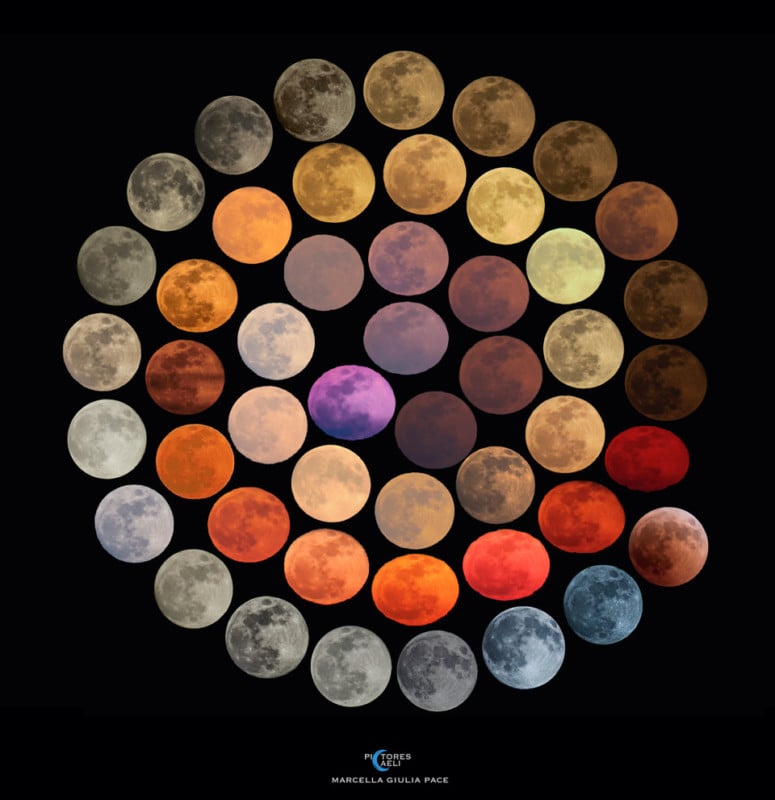
Full Moon composite

I was moon gazing last night because I couldn’t sleep so plunked down on my front steps looking up at it’s pearly face and endless mystery. I’d recently returned a manuscript and memo to a client and so my thoughts drifted to her story and characters. And just for fun, I imagined Kate the protagonist sitting in her lakeside home gazing up at the same moon though we were separated by many miles. Yes, this makes me sound a bit nutty, but I’ve been collaborating on this series for more than ten years, so I wasn’t surprised I could easily imagine Kate’s enjoyment of the moonglow.

Besides, I’m still considering the power of her latest story. The places where it’s really connecting to the reader and building toward the climax and also the climax of the long series that’s happening in a future novel.  Some days –and don’t-sleep-well-during-a-full-moon nights–when my clients’ stories are living in me, I’m simply having a wonderful time. And some days I’m unraveling thorny puzzles.

As we know good stories connect us, sustain us, push us beyond our skin and lives.  And I’ve been swimming in stories lately–reading more than one book at a time, though I’m now reading Marian KeyesMy Favourite Mistake. It’s the seventh book in a series about a sprawling Irish family and I’m in book love. And recommend it heartily even though I’m halfway through.

And I’ve been writing a lot lately, dabbling some days, making progress on others. I’ve been refining the voice I’m using in my current work. And have been ping-ponging around, examining other writers’ voices, analyzing how they’ve made them memorable. Amid this I’m expanding my word lists–I have many–with the kind of excitement I reserve for the Christmas holidays.  I’m having a blast and hope your writing is going well too.

Also hoping you’re always analyzing and evaluating writing even as you’re enjoying it–or maybe your method is to simply read for enjoyment and then allow the whole story to wander amid your thoughts once you’ve reached the end. Heaven knows my head is full of stories.

Back to this bodacious moon. When Macolm Gladwell’s Outliers: The Story of Success was published it introduced a  newish concept about expertise. According to Gladwell and a study done by Herbert Simon and William Chase, mastery is achieved after about 10,000 hours of effort. Or practice, if you will.  Ever since I’ve heard this figure it has niggled at me.

Over the years I’ve come to question it because I’ve read too many authors whose first book was brilliant. Known writers who stumbled into success early in their careers.  Known many people who were clearly born artists or musicians or marvels. People who were fabuously successful  long before they logged in thousands of hours.  On the other hand, I know athletes and artists and musicians who have logged in countless hours of practice.

Ten thousand is such a finite number.  Where do prodigies fit into this equation? So here’s a short piece that adds more dimension to this question. What do you think?

Since you’ve stopped by here, you know the power of persistence. Of firm routines and habits. Of training your brain to overcome resistance. {Isn’t it fun how persistence and resistance rhyme?}

This leads me to the marvelous photo at the top of this post. Italian school teacher and astrophotographer Marcella Guila Pace  spent 10 years photographing full moons to assemble this montage. Here’s a link that explains more about her process.

Pace also explains that it doesn’t take 10 years to photograph this many colors of the moon. She also says,  “There’s something magnetic about the photo and I get daily compliments about it from around the world. It’s really important to me that it carries a message of respect for all forms of life. To live in harmony we need to be aware that it’s not just fellow man that is our neighbor, but that all forms of life are on this eternal path with us. It’s a path that’s isn’t a circle with a man in the center, but a spiral that’s constantly evolving.”

Isn’t this marvelous?

Keep writing, keep dreaming, have heart

Written By: Jessica Morrell - Aug• 16•24

Secrets are the enduring motor that make fiction run: what you aren’t telling me, what I’m keeping from you, what the neighbors know about the love affair. ~ Rebecca Makkai

August–how are you going to spend your one wild and precious life?

Written By: Jessica Morrell - Aug• 02•24


The Summer Day

….I do know how to pay attention, how to fall down

into the grass, how to kneel down in the grass,

how to be  idle and blessed, how to stroll through the fields,

which is what I have been doing all day.

Tell me, what else should I have done?

Doen’t everything die at last , and too soon?

Tell what is it you plan to do with your one wild and precious life? ~ Mary Oliver,

Written By: Jessica Morrell - Jul• 24•24

As this world becomes increasingly ugly, callous and material it needs to be reminded that the old fairy stories are rooted in truth, that the imagination is of value, that happy endings do, in fact, occur, and the blue spring mist that makes an ugly street look beautiful is just as real a thing as the street itself. ~ Elizabeth Goudge

Reminder that Wonder is Everywhere

Written By: Jessica Morrell - Jul• 19•24

This is a closeup of a dragonfly wing shortly after emerging, phographed by Kelly Jean Rebar. Be on the look out…

Image


What The New York Times Best Books Missed

Written By: Jessica Morrell - Jul• 19•24

Alas, the heat wave continues here in the Pacific Northwest. It was 97 on Tuesday, or doomsday for my sweet peas. They bloomed late because of a cold spell in April and May so made a brief, but lovely appearance this season. If you’ve never smelled sweet peas you’re missing out on a divine scent. After Tuesday’s scorcher they’re bleached and crisp and sad. Good news is I’ve just learned there’s a perennial variety which I’m seeking out. I’m might also try to plant a second crop in the fall, grown from seed. If possible. More good news is that next week we should have moderate temperatures and my tomatoes are ripening.

There’s been some consternation among authors I know about the many worthy books The New York Times list of the best books of the 21st century left out. It’s been especially noted that titles from small presses were largely ignored. Into the breach, Literary Hub to the rescue suggesting 71 more books you need to know about. {Ahem, they added a ‘non-boring list’ in the subtitle.} If you don’t subscribe to their newsletter, I heartily recommend it.

It covers all things writing, a delightful smorgasbord of  literary criticism and history, author interviews and eulogies, thoughtful craft suggestions, and other media exploratons. I just clicked on The Rise of the Feminist Caper: A List. File under Guilty Pleasures. Have I mentioned how blazing hot it’s been here?   It’s also witty, snobby, but, then again it’s broader than that. Oh, and rather gossipy. And it comes out every day.

Here is their list–an intriguing gathering, many I’m unfamiliar with I’m humbled to report.

Underland: A Deep Time Journey - MacFarlane, RobertHowever, several titles  have been on my to-read agenda, such as the brilliant Robert MscFarlane’s Underland published in 2009. I supply my elderly father with books and, appreciating this nudge, am going to send him the book and pick up my own copy.

Here’s the Lit Hub review: One hates to label  any book by a living writer his “magnus opus” but Macfarlane’s Underland–a deeply ambitious work that somehow exceeds the boundaries it sets for itself–reads as both offertory and eligy both finding wonder in the world even as we mourn its destruction by our own hand. If you’re unfamiliar with its project, as the name would suggest, Underland is an exploration of a world beneath our feet from the legendary catacombs of Paris to the ancient caves of Somerset, from the hyperborean coasts of faraway Norway to the mephtic karst of the Slovenian-Italian borderlands.

Marcfarland has been a generous guide in his wanderings, the glint of his erudition softened as if through a welcoming haze of a fireside yarn down at the pub.  Even as he considers all we have wrought upon the earth, squeezing himself into the darker chambers of human creation–our mass graves our toxic tombs–Macfarland never succombs to pessimism, finding instead in deep contemplation  a path to humility. This is an epochol work as deep and resonant as its subject matter, and would represent for any writer the achievement of a lifetime.  (One of our Best Works of  Nonfiction  for the decade of 2010-2019)

By the way, the nonfiction list mention above is brimming with masterpieces.  Confession: I had to look up mephtic karst. It’s a foul-smelling limestone plateau in the aforementioned borderlands.

Now aren’t writers the most magical creatures?

Might I add that finding wonder is such a necessity in our lives, but especially these days? And  borderlands whispers meeting, myth, murk, and mystery, doesn’t it?

Keep writing and reading, keep dreaming, have heart

And please vote and bring voters to the polls.

PS I’m also procuring Slammerkin by Emma Donohgue. How could I resist?land

Best Books of the 21st Century???

Written By: Jessica Morrell - Jul• 13•24

Dawn is shouldering in here bringing another day of hot weather. It got up to 105 this past week. If you live in North America you might be in a similar hotbox.  But I managed to escape to the Oregon coast for a few days of bracing Pacific air. As in temperatures in the 50s and 60s with a brisk wind blowing most of the day, especially at night.

While there I visited a few of my favorite beaches, a garden, a cafe, a bookstore,  seafood shop, and restaurant. I avoided when of my favorite antique stores because I’m currently culling my belongings and trying not to colllect more. I collected a few rocks but didn’t find any sand dollars, my favorites.  And I returned home renewed. I read Margo has Money Problems by Rufi Thorpe while I was there with sparkling waves nearby. It’s fun, but it’s darkly funny and it was a perfect beach read because I needed to find out how Margo manages single motherhood amid a cast of characters who were expertly drawn. But it also delves into class and the realities of bluecollar jobs, drug addiction, how women are judged to be fit or unfit mothers and how women’s morality is judged much differently than men’s.

I’m always fascinated by best books lists. I’m not great at creating my own list because I keep encountering new favorites, though I do know that Leif Enger’s I Cheerfully Refuse  will be on my  top five list for the rest of the my life. It’s exquisite. It’s beautifully written. The characters will break and mend your heart with their desperation and courage. As soon as I finished reading the final page and left my new best friends between its covers,  I was ready to read it again, but so far I’ve held off. Since surely another hot spell will sizzle our region so I’ll reread it then. But I’ve given it as gifts and urged it on friends who also loved it. If your vocabulary is wimpy or you reach for the same words again and again, Enger is your man.

So here’s the Best Books of the 21st Century list from The New York Times. More than 500 authors and book lovers chose their top 10 books and some choices are fascinating, some odd. Surely many great books are missing, but then we’re not seeing all the lists. I’ve read 50 of these titles and don’t agree they all belong on this list, but then taste is subjective. A romance writer choosing mostly  romance titles comes to mind.  {This list should not be behind a paywall.} You also have an opportunity to contribute your choices.

Here are some of my favorites from this list: The Known World, Edward P Jones,  All the Light We Cannot SeeAnthony Doerr, Olive KitteridgeEmily Strout, Brooklyn, Colm Toibin, Winter’s Bone, Daniel Woodrell, The Worst Hard TimeTimothy Eagan, The Road, Cormac McCarthyThe Sisters Brothers, Patrick de Witt, Cutting for Stone, Abraham Verghese, Small Things Like These, Claire Keegan, Train Dreams, Denis Johnson, The Overstory, Richard Powers

What stories do you believe are missing from the list? Are they from smaller presses? Do you keep a favorite’s list? Write book reports for yourself?

Meanwhile, keep reading  like a writer, keep dreaming, having heart

Let me into the dark of your mind

Written By: Jessica Morrell - Jul• 10•24

Well, it’s another day of another heat wave. Color me bleak. And sweaty. One of the many reasons I moved to the magical Pacific Northwest was to escape the miserable, humid summers of the Midwest.

American Fiction” de Cord Jefferson, la ...When the going gets over 90 degrees farenheit, I turn to fiction and films, and, as previously mentioned, TV shows set in Alaska. And let’s not forget watermelon.

A recommedation for you in the film department is American Fiction now streaming. It’s a sometimes scathing, often hilarious dramedy about a fed-up, cynical novelist’s swipe at modern pubishing that backfires on him–spectacularly. Delicious inner conflict ensues. The central issue is how Black issues and lives are portrayed–and exploited–in media–and how Black creatives strive for authenticity.

But it also has a deep emotional core about a troubled, successful family coping with a complex of problems and old hurts.  They were my favorite scenes. Jeffery Wright as the main character Monk is perfectly cast and his many changing expressions and reactions are a delight. The film is based on the novel Erasure by Percival Everett.  Here‘s a summary at Gray Wolf Press.

If you’re currently feeling bitter about the pubishing industry this one is guaranteed to cheer you.

As for fiction, while cowering indoors with the AC on, I’ve started reading Margo’s Got  Money Problems: A Novel  by Rufi Thorpe.  I don’t usually talk about novels before I finish reading them, but I’ve read the opening chapters and a few articles about her. She’s fasc-in-ating. Thorpe is also the author of four previous novels including the PEN/Faulkner finalist The Knockout Queen. Alas, it’s got yet another unfortunate pink cover design though the central image is fun–when will this silly trend end? But I’m truly excited to read it. And check out her other novels, especially since it’s likely more heat waves will breathe hellfire around here.

It’s written in both the first and third person and starts with the author talking directly to the reader in second person. And viewpoint is woven into the storyline as when the protagnist takes a college English course about impossible or unlikely viewpoints. At one point she writes: It’s true that writing in third person helps me. It’s so much easier to have sympathy for the Margo that existed back then rather than try to explain  how and why I did all the things I did. I’m going to be studying her techniques–and likely will swoon over her acrobatics.

Here’s the opening paragraph: You are about to begin reading a new book and to be honest,  you’re a little tense. The beginning of a novel is like a first date. You’re hoping from the first lines that an urgent magic will take hold, and you will sink into the story like a hot bath, giving yourself over entirely. But this hope is tempered by the expectation that in reality you are about to learn a bunch of people’s names and go along politely like you’re attending the baby shower of a woman you hardly know. And that’s fine, goodness knows you’ve fallen  in love with books that didn’t grab you in the first paragraph. But that doesn’t stop you from wishing they would, from wishing they would come right up to you in the dark of your mind and kiss you on the throat. 

How could I not open a tale that has such a fresh and subversive approach? This crowded media landscape requires risk taking and Thorpe swings for the cheap seats. You might enjoy this piece about her career trajectory and approach.   Even her Acknowledgments are a hoot. Here’s the final paragaph: Obviously the final thank you goes to you, the reader, who I will never meet, and with whom I am in love, whoever you are.  This state–this private whisper chamber tucked away in the heart of the world we call novels–is everything to me. Thank you for letting me into the dark of your mind and allowing me to relentlessly and anguished-ly, excitedly lie to you. I would die if you didn’t let me. I would surely die.

As someone prone to hyperbole I had to admire those final words. I’ve also just ordered The Knockout Queen after reading the opening chapter online. Discovering an author you didn’t know about is a special, kinship-like thrill isn’t it?

Keep reading, keep writing, have heart

Analyze how authors make their stories come alive.

And for god’s sake please VOTE for leaders who are working to reverse climate change.