Writing may or may not be your salvation; it might or might not be your destiny. But that does not matter. What matters right now are the words, one after another. Find the next word. Right it down. ~ Neil Gaiman
Writing may or may not be your salavation
Written By: Jessica Morrell
-
Feb•
17•18
Take care with minor characters
Written By: Jessica Morrell
-
Feb•
12•18
If you’re going to have a character appear in a story long enough to sell a newspaper, he’d better be real enough that you can smell his breath. ~ Ford Maddox Ford
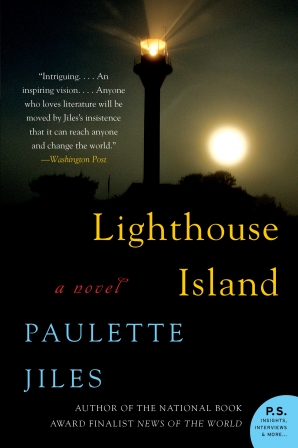 Minor characters are too often faceless walk-ons in fiction. But that means the writer has missed a chance to create reality and complexity. Here’s how it’s done in Paulette Jiles dystopian novel Lighthouse Island. This scene features two minor characters her protagonist Nadia Stepan is about to meet. Problem is, she’s on the lam in a hideous, nightmare society and the authorities are searching for her. And she’s an outlaw in a desiccated, chaotic world where danger lurks everywhere and the underclass are perishing from thirst and deprivation. The government is a diabolical network of agencies that inflict senseless cruelty on most of its citizens while the one percent live in luxury.
The first character she’ll meet for only a few minutes, the second one actually saves her and she spends maybe 5 minutes with him. Nadia’s trying to bluff her way out of capture–something she’s good at. At least so far. Notice how Jiles instills them with just enough realism to underline their purpose. How she manages this trick with only a few economical words.
Okay. The officer had tissue-engineered jaws square as a brick and eyes of two different colors and a scorpion tattoo on his neck. She saw him hesitate and so she turned and walked away down the narrow street and the biscuit-colored buildings of concrete whose dim and broken windows stared at each other across the pavement.
A hand shut on her elbow and shoved her forward. Nadia turned. A stout Forensics officer stared straight ahead and pushed her on. His gray hair shone short and clean under an old-fashioned watch cap with a bill and his body smelled of sweat and hot uniform cloth. She started to say something, to invent an objection and a story but he said Shut up. He was not much taller than she was something about him of that proctor in high school so long ago but more unwavering and quiet.
 Here are some tips for making minor characters count:
1. Anchor them to a time and place–a street cop, a waitress, a lounge singer, a Wall Street executive.
2. Give them at least one memorable characteristic. Mismatched eyes. Purple hair. A synthetic smile.Nasty yellow teeth. Vomit breath.
3. Create an interaction, however brief–a taxi ride, an insult or accusation, asking for directions, buying a coffee. Nadia sneaks into the Ritz Carlton and makes it to the elevator. A guard came up. His uniform was sweaty and the hem of his pants legs were leaking threads like a fringe. He smiled at her.
All right, all right, he said. What floor?
4. Don’t worry about introducing them–they can simply appear. Emergency workers in orange coveralls came running through the dust scrim and shouted at her to go back but she walked on toward them. The telephone poles were down and electrical wires curled in the rubble.
5. Imbue them with meaning to your protagonist. In Nadia’s world guards, troops, cops are the enemy. And they’re everywhere.
6. Give them a voice if possible. In a crowd of people who had lined up for something she saw a woman with a toddler in one arm.
Cute kid! Nadia said and slipped the badge into the toddler’s baggy pants.
The woman glared at her. Get one of your own, she said.
What will it take?
Written By: Jessica Morrell
-
Feb•
09•18
This has been another grim, difficult week in world affairs and for our tattered republic. So many worrying events going on; another government shut down, DACA hasn’t been fixed, the stock market is volatile, more scandals and cover-ups in the White House. I’m weary, citizens everywhere are weary.
But across the Pacific, in another time zone amid chilling temperatures, the Winter Olympics have begun. I plan on watching my favorite events; I plan on following the athletes’ stories, I plan to cheer on Team USA.
And I’ve found that when life is clamoring or ugly, watching figure skating can make it all recede. So last night I watched the men’s singles and the pairs skate. Such grace and ease and athleticism across that frozen surface. I’m inspired by their stories, by their sacrifices, and thousands of hours they’ve dedicated to their sport.

Nathan Chen is a rising star skating for the US. Amid much hype and speculation about his Olympic chances he has mastered the difficult quadruple jump. He’s even called the Quad King. And yesterday in his first performance in the men’s short program, with the whole world watching, he blew it. Even though he performed the first quadruple flip in Olympic history. All those hours of practice and more practice and in two minutes and 40 seconds it didn’t matter. He had one of the worst performances of his career. Later, after receiving his disappointing score he said he felt bad about letting down his team.
Here’s my point:
We’re heading into mid-February, the Chinese New Year, Lent, and Valentine’s Day. If you’ve fallen, get up. Lace up your skates. Head to the ice. I’m speaking figuratively here, of course.
Start over if need be. Pull out an old manuscript and read it with a fresh, scrutinizing eye. Transmute heartbreak or breakthrough in your memoir. Do whatever it takes, because writing will extract much from you. Make it your obsession. Because becoming a real writer requires stamina and thousands of hours.
I guarantee that you’ll struggle to make it look effortless. To translate the truth of your body onto the page. At times you’ll feel muddled and thick-headed; other times you’ll feel deliciously alive and clear-headed. I can also guarantee there are fewer activities more gratifying than birthing a story, a book, a poem. It’s such a rare, fine gift to the world.
And go Team USA
Ursula K. LeGuin: There must be darkness to see the stars.
Written By: Jessica Morrell
-
Jan•
24•18
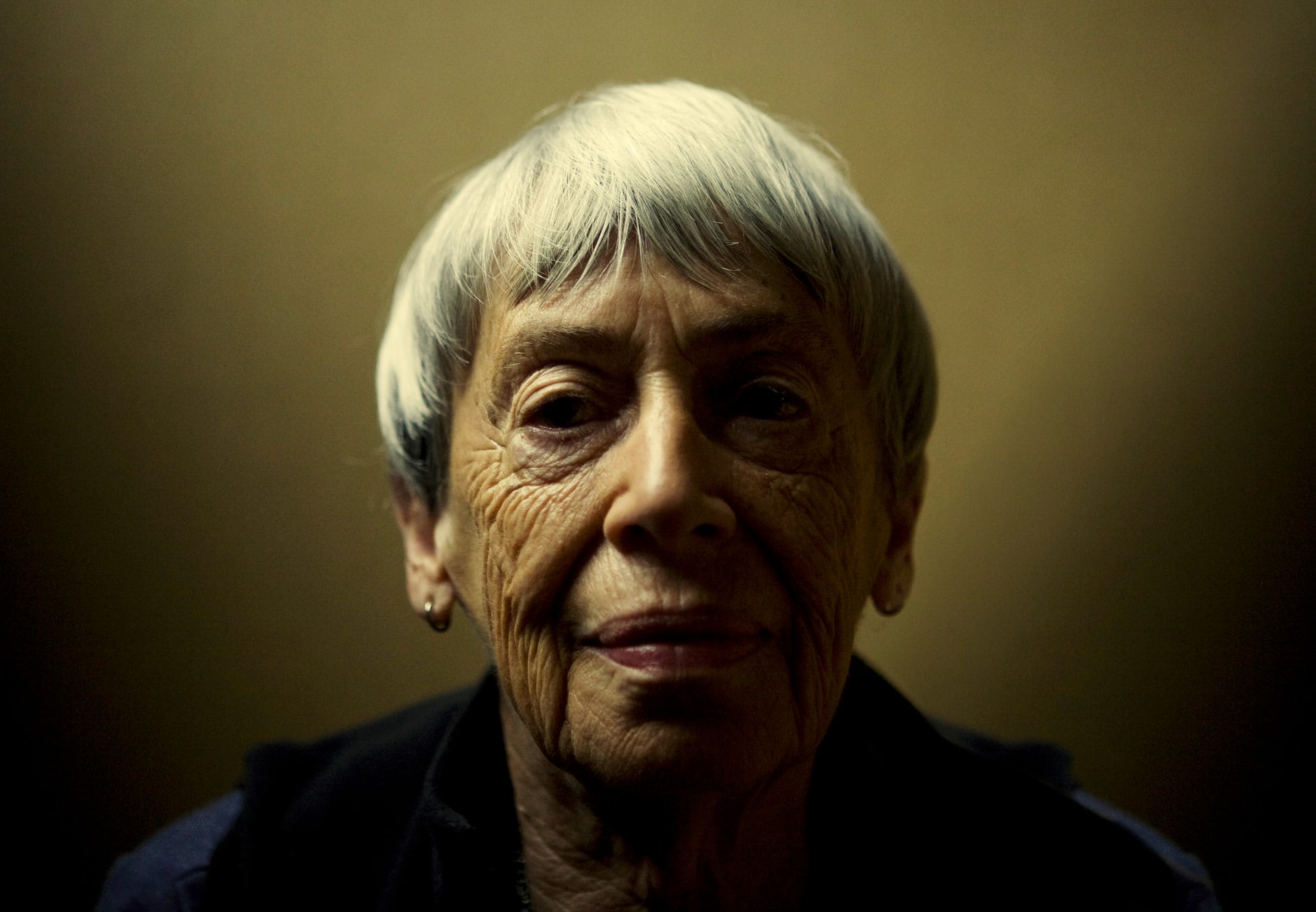 The legendary writer Ursula K LeGuin died on January 22 in her home in Portland, Oregon. She was 88 and leaves a long legacy of novels, stories, essays, poems, and musings. It goes without saying that she inspired millions, including many writers. Her website is a wonder and includes a link to her blog and recent writings.
Here is a smattering of her brilliance:
“When women speak truly the speak subversively–they cannot help it; if you’re underneath, if you’re kept down, you break out, you subvert. We are volcanoes. When we women offer our experience as our truth, as human truth, all the maps change. There are new mountains. That’s what I want–to hear you erupting. You young Mt. St. Helenses who don’t know the power in you–I want to hear you.” Bryn Mahr College commencement speech, 1986
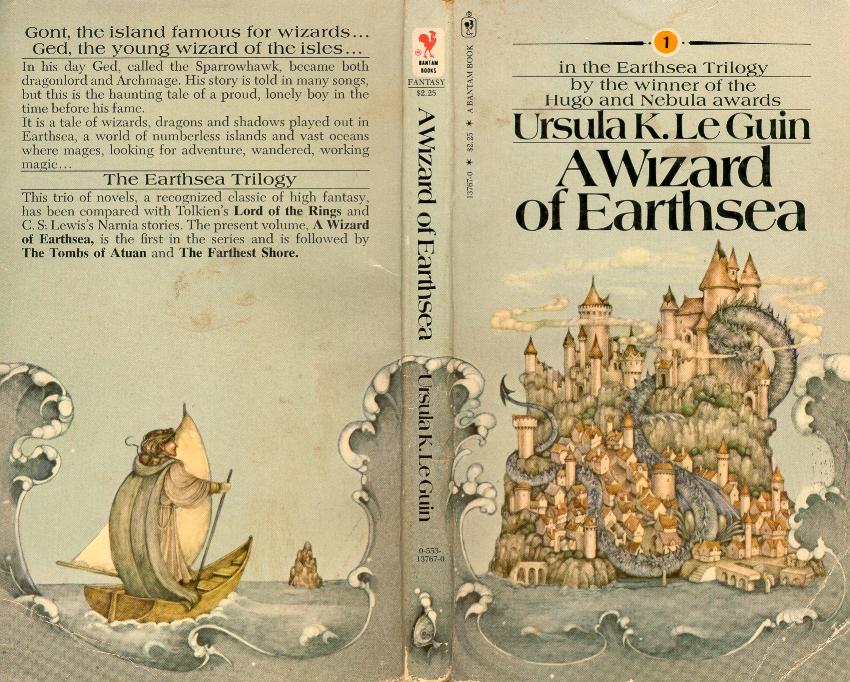
“It is very difficult for evil to take hold of the unconsenting soul.” A Wizard of Earthsea
“Love doesn’t just sit there like a stone; it has to be made like bread, remade all the time, made new.”
“Change is freedom, change is life. It is always easier not to think for oneself. Find a nice safe hierarchy and settle in. Don’t make changes, don’t risk disapproval, don’t upset your syndics. It’s always easiest to let yourself be governed. There’s a point, around age twenty, when you have to choose to be like everybody else the rest of your life, or to make a virtue of your peculiarities. Those who build walls are their own prisoners. I’m going to fulfill my function in the proper social organism. I’m going to unbuild walls. ”
“The book itself is a curious artifact, not showy in its technology but complex and extremely efficient: a really neat little device, compact, often very pleasant to look at and handle, that can last decades, even centuries. It doesn’t have to be plugged in, activated, or performed by a machine; all it needs is light, a human eye, and a human mind. It is not one of a kind, and it is not ephemeral. It lasts. It is reliable. If a book told you something when you were 15, it will tell it to you again when you’re 50, though you may understand it so differently that it seems you’re reading a whole new book.”
— Staying Awake: Notes on the alleged decline of reading, Harper’s Magazine, February 2008.
“You cannot buy the revolution. You cannot make the revolution. You can only be the revolution. It is in your spirit, or it is nowhere.”
 “The creative adult is the child who has survived.”
“We read books to find out who we are.” The Language of the Night, 1979.
“It is above all by the imagination that we achieve perception and compassion and hope.”
“When you light a candle you also cast a shadow.”
Here is Julie Phillips brilliant piece on her published in the New Yorker, The Fantastic Ursula K LeGuin. I cannot recommend it enough.
Here is a link to Margaret Atwood’s fare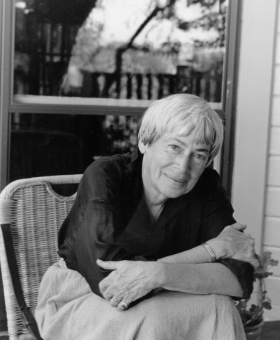 well to her in The Guardian.
The interview in The Paris Review.
John Scalzi’s tribute in The Los Angeles Times.
She knew dragons. Keep writing, keep dreaming, read great writers.
Joan Didion
Written By: Jessica Morrell
-
Jan•
11•18
 “I’m not telling you to make the world better, because I don’t think that progress is necessarily part of the package. I’m just telling you to live in it. Not just to endure it, not just to suffer it, not just to pass through it, but to live in it. To look at it. To try to get the picture. To live recklessly. To take chances. To make your own work and take pride in it. To seize the moment.”
– Joan Didion
Join me at Writers in the Grove 2018 Authors Conference, January 27
Written By: Jessica Morrell
-
Jan•
10•18
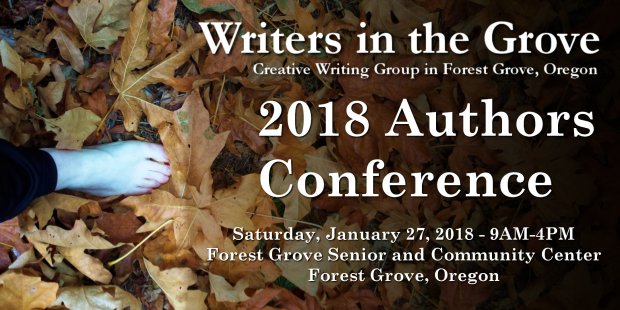 For more information visit their site here.
I’ll be teaching a workshop on Character Arc. Keynote speaker Deborah Reed. Other workshops by Holly Lorincz, Chip McGregor, Paulann Petersen, MaryJane Nordgren, and Kristen Thiel.
Be generous to your characters
Written By: Jessica Morrell
-
Jan•
02•18
Be generous to your characters; kill them, save them, break their hearts  and then heal them. Stuff them with life, histories, emotions, and people they love and once you’ve done that, once they’re bursting at the seams; strip them bare. Find out what they look like–how they stand, talk, move when they have nothing left. Now put them back together, fill them once more with life, except now leave enough room for the reader to squeeze their own heart and imagination inside. ~ Dinaw Mengestu
January
Written By: Jessica Morrell
-
Jan•
01•18

Wishing you a productive year filled with inspiration.
But of course inspiration simply doesn’t fly in the door. We invite it by reading and writing and taking in art. We invite it with stillness and walks and attention. How are you going to achieve your writing goals this year? Are you staking out morning hours for achieving them? Going to write after the kids are in bed? Have you bought new notebooks, joined a class, made a pact, or somehow sent your subconscious signals that you plan to write more often this year?
I wrote by hand a lot last year and I plan to keep this practice going and this winter to write by candlelight. It makes me feel connected to writers through the centuries and it’s a slow, deliberate practice that somehow makes words come easier and increases my focus. Candlelight is also calming, creates a ritual, and if I’m stuck I can stare into the flames and become unstuck. Candlelight encourages introspection and a deep inner quiet. And candlelight is such a welcome break from the glare of a screen and electric lights in general.
Keep writing, keep dreaming, have heart
A book, too, can be a star….
Written By: Jessica Morrell
-
Dec•
27•17