Word by Word

Practical insights for writers from Jessica P Morrell

Storytellers ought not be too tame….

Written By: Jessica Morrell - Nov• 28•17

Rains are here again today–steady thrumming against the tin roof of my porch, the backdrop as I work on a client’s story. I’m still eating Thanksgiving leftovers, getting over a cold, and wearing layers as befitting my circumstances. A house not as snug as I’d like during these short days of winter’s looming.  But, I’m looking forward to the magic of more holidays. Yes, I’m one of those people who believe in the goodness and magic and beauty of the winter holidays. Bring on the carols, the decorations, the baking, the gatherings.

As for this gem, I could not agree with this more.

“Storytellers ought not be too tame. They should be wild creatures who function adequately in society. They are best in disguise. If they lose all their wildness they cannot give us the truest joys.” ~ Ben Okri

Description must work for its place

Written By: Jessica Morrell - Nov• 20•17

Description must work for its place. It can’t be simply ornamental. It usually works best if it has a human element; it is more effective if it comes from an implied viewpoint, rather than from the eye of God. If description is coloured by the viewpoint of the character who is doing the noticing, it becomes, in effect, part of character definition and part of the action. ~ Hilary Mantel

Fill your ears with the music of good sentences….

Written By: Jessica Morrell - Nov• 16•17

“Fill your ears with the music of good sentences, and when you finally approach the page yourself, that music will carry you. It will remind you that you are a part of a vast symphony of writers, that you are not alone in your quest to lay down words, each one bumping against the next until something new is revealed. It will exhort you to do better. To not settle for just good enough. Reading great work is exhilarating. It shows us what’s possible. When I start the morning with any one of the dozens of books in rotation on my office floor, my day is made instantly better, brighter. I never regret having done it. Think about it: have you ever spent an hour reading a good book, and then had that sinking, queasy feeling of having wasted time?” ~ Dani Shapiro

What Writers Can Learn from Good Night Moon

Written By: Jessica Morrell - Nov• 15•17

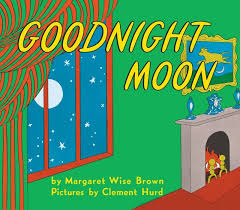
What stories are embedded in your memory? Why do they keep resonating as years go by?  In The Atlantic’s By Heart column Celeste Ng describes how she was influenced by Good Night Moon, a story she read again and again to her toddler son.  Read it here.

“For the first three years of his life, my son insisted on hearing Goodnight Moon before bedtime. Like most babies, he was not a good sleeper by disposition—but reading seemed to help, and this book specifically became part of his whole wind-down ritual. By now, I have read Goodnight Moon literally over a thousand times. As I read it again and again, I started to wonder: Why is this the book everybody feels a child must have? Why is this the book you’re sent by all your relatives and friends, people who must know you already have a copy—but want to give you another one, just in case?

It’s a very odd book, after all. There is no real story. The story is: The rabbit goes to bed. That’s it. The text is just a list of items, and the artwork has no action in it. And yet, it really does capture something for us. Something more powerful than just pure nostalgia could explain.

We cannot help but answer the question why which, for me, is the fundamental question of fiction.” 

keep writing, keep dreaming, have heart


Gail Godwin on Characters

Written By: Jessica Morrell - Nov• 08•17

     The characters that I write are all parts of myself and I send them on little missions to find what I don’t know yet. ~ Gail Godwin

NaNoWriMo tip: Feature your protagonist’s worst fear.

Written By: Jessica Morrell - Nov• 07•17

Reading fiction makes us  tense and often scared. And I’m not talking about only horror or thrillers. If a reader isn’t afraid about what fate awaits the central characters, and if the main characters aren’t vulnerable, then the story won’t work properly and readers won’t lose sleep to discover if the character survives.

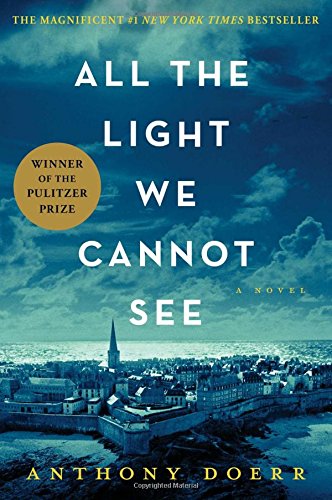
In Anthony Doerr’s All the Light We Cannot See readers follow a  blind French girl, Marie-Laure, and young German soldier, Werner Pfennig, in Germany and occupied France. The backdrop for the story is the period surrounding World War II before D-Day.  Marie-Laure understandably fears being alone amid a world gone mad. And indeed, she ends up alone because the Nazis capture her Papa and she’s left to survive by her wits and senses and the lessons her father has taught her.

Werner and his sister are orphans and as a techno-prodigy who can build and fix radios, he’s swept up into the relentless Nazi machine. He joins Hitler Youth wanting to escape his fate of becoming a coal miner–his chief fear.  However, he’s a truly gifted boy. His mind is too active, curious, and mechanically inclined for this dark and brutal work.  But will he survive while tracking down the Resistance radios operating in France? Will he come to realize the truth about the brutal regime he serves?

Another technique Doerr used was to introduce Marie-Laure and Werner during their childhood before the war. As in real life, meeting characters when they’re children makes readers invest more in them.

It’s an intricate and carefully plotted tale with many of the events drawn from history. Their paths collide by story’s end and the novel makes us think about the most vulnerable victims of war. Doerr discusses how he came to write their stories here.

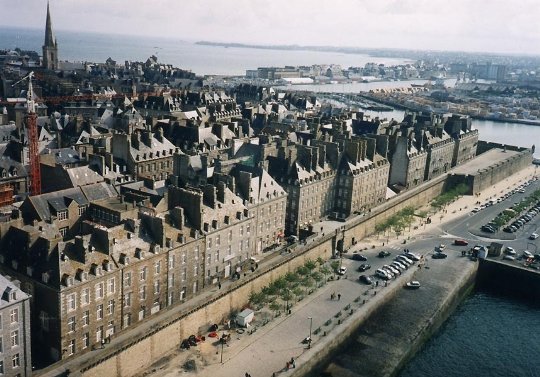
Circumstances are a huge factor in creating fiction–in this novel Werner is born in a mining town and Marie-Laure loses her eyesight at six.  Circumstances will be linked to the trajectory of your plot. In All the Light We Cannot See  readers observe the Germans occupying Paris  in 1940 so Marie-Laure and her father flee to the Saint-Malo on the coast of Brittany. Her great-uncle Etienne lives there, but he’s a recluse suffering from the traumas of WWI.  The French  oppose the Nazi occupation and form the Resistance. Marie is drawn to help and is an asset because of her blindness and youth. The story also includes a rare and cursed jewel that increases the ante because a Nazi  sergeant major knows of its existence. He’s been tasked to collect French artifacts that Hitler covets. And woven through the story is the magic of radio waves and their practical role in the war.
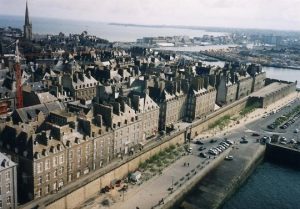
The story is replete with beautiful writing and underneath it all, lies human vulnerabilities.

She cannot say how many others are with them. Three or four, perhaps. His is the voice of a twelve or thirteen-year-old. She stands and hugs her huge book to her chest, and she can hear her cane roll along  the edge of the bench and clatter to the ground. Someone else says, ‘They’ll take the blind girls before they take the gimps.’ The first boy groans grotesquely. Marie-Laure raises her book as if to shield herself.

NaNoWriMo tip: Give your major players an agenda

Written By: Jessica Morrell - Nov• 03•17


Plot is people. Human emotions and desires  founded on the realities of life, working at cross purposes, getting hotter and fiercer as they strike against each other until finally there is an explosion–that’s Plot. ~ Leigh Brackett


Your protagonist and antagonist will always have opposing agendas. The clearer your characters’ agendas, the more readers will understand why they do what they do.tia

One of the clearest and scariest examples is found in Stephen King’s gruesome tale, MiseryThe horror thriller  begins when Paul Sheldon, a bestselling author, is injured in a car accident in the midst of a snowstorm. Which is where Annie Wilkes, his number one fan, enters the picture. She’s rescued him and when he regains consciousness in her isolated home in the Colorado Rockies, he finds her tending his shattered body.

But soon gratitude is replaced by worry, and then by terror and desperation. Problems arrive when Annie learns that Sheldon is about to end his series featuring Misery Chastain. Wilkes, a former nurse, in possession of a surprising array of pharmaceuticals,  is having none of it. She demands that he write a new novel, resurrecting her favorite character. And she’ll do anything to make sure he finishes the novel. Anything.

Oh, and secondary characters need agendas too.  Even sidekicks and best friends can be at odds with the protagonist’s goals.  Or keeping a secret. Or secretly in love with the antagonist.

Keep writing, keep dreaming, have heart

NaNoWriMo tip: Keep the fire burning

Written By: Jessica Morrell - Nov• 02•17

As a writer I need to have my story festering around in my head all the time, so that when I sit down to write its as though I’m writing from memory, rather than from imagination. ~ Ann Cleeves

If it’s November….it must be NaNoWriMo

Written By: Jessica Morrell - Nov• 01•17

It’s that time again. And I’m not talking about all the Christmas folderol in the stores already. Writers everywhere know that November is the month for joining National Novel Writing Month (NaNoWriMo). Time to hunker down, write your heart out at a dizzying pace, aiming for 50,000 words by December 1. On November 1, 2015 I wrote a long, detailed, and dare I say, practical post about the whole matter of writing fast and smart. You can find it here and it’s called NaNoWriMo Hacks & a Bit of Tough Love.

And from October 31, 2014 here (Slightly Crazy: Map Your Course to Survive NaNoWriMo) is a list of the essentials every novel needs:

  1. A knowable protagonist who will fascinate readers.
  2. A problem that needs solving or a goal that needs reaching.
  3.  An understanding of your protagonist’s inner and outer desires.
  4.  An interesting/workable locale.
  5.  A menace/threat hanging over the protagonist.
  6.  An antagonist.
  7.  How it will all work out.

Good luck. Write fast, don’t edit, don’t look back, live the story. If you get stuck jump past that scene and carry on. Keep asking yourself: what does my character want. Then block that desire.

November

Written By: Jessica Morrell - Nov• 01•17