This is a closeup of a dragonfly wing shortly after emerging, phographed by Kelly Jean Rebar. Be on the look out…

This is a closeup of a dragonfly wing shortly after emerging, phographed by Kelly Jean Rebar. Be on the look out…
Alas, the heat wave continues here in the Pacific Northwest. It was 97 on Tuesday, or doomsday for my sweet peas. They bloomed late because of a cold spell in April and May so made a brief, but lovely appearance this season. If you’ve never smelled sweet peas you’re missing out on a divine scent. After Tuesday’s scorcher they’re bleached and crisp and sad. Good news is I’ve just learned there’s a perennial variety which I’m seeking out. I’m might also try to plant a second crop in the fall, grown from seed. If possible. More good news is that next week we should have moderate temperatures and my tomatoes are ripening.
There’s been some consternation among authors I know about the many worthy books The New York Times list of the best books of the 21st century left out. It’s been especially noted that titles from small presses were largely ignored. Into the breach, Literary Hub to the rescue suggesting 71 more books you need to know about. {Ahem, they added a ‘non-boring list’ in the subtitle.} If you don’t subscribe to their newsletter, I heartily recommend it.
It covers all things writing, a delightful smorgasbord of literary criticism and history, author interviews and eulogies, thoughtful craft suggestions, and other media exploratons. I just clicked on The Rise of the Feminist Caper: A List. File under Guilty Pleasures. Have I mentioned how blazing hot it’s been here? It’s also witty, snobby, but, then again it’s broader than that. Oh, and rather gossipy. And it comes out every day.
Here is their list–an intriguing gathering, many I’m unfamiliar with I’m humbled to report.
 However, several titles have been on my to-read agenda, such as the brilliant Robert MscFarlane’s Underland published in 2009. I supply my elderly father with books and, appreciating this nudge, am going to send him the book and pick up my own copy.
Here’s the Lit Hub review: One hates to label any book by a living writer his “magnus opus” but Macfarlane’s Underland–a deeply ambitious work that somehow exceeds the boundaries it sets for itself–reads as both offertory and eligy both finding wonder in the world even as we mourn its destruction by our own hand. If you’re unfamiliar with its project, as the name would suggest, Underland is an exploration of a world beneath our feet from the legendary catacombs of Paris to the ancient caves of Somerset, from the hyperborean coasts of faraway Norway to the mephtic karst of the Slovenian-Italian borderlands.
Marcfarland has been a generous guide in his wanderings, the glint of his erudition softened as if through a welcoming haze of a fireside yarn down at the pub. Even as he considers all we have wrought upon the earth, squeezing himself into the darker chambers of human creation–our mass graves our toxic tombs–Macfarland never succombs to pessimism, finding instead in deep contemplation a path to humility. This is an epochol work as deep and resonant as its subject matter, and would represent for any writer the achievement of a lifetime. (One of our Best Works of Nonfiction for the decade of 2010-2019)
By the way, the nonfiction list mention above is brimming with masterpieces. Confession: I had to look up mephtic karst. It’s a foul-smelling limestone plateau in the aforementioned borderlands.
Now aren’t writers the most magical creatures?
Might I add that finding wonder is such a necessity in our lives, but especially these days? And borderlands whispers meeting, myth, murk, and mystery, doesn’t it?
Keep writing and reading, keep dreaming, have heart
And please vote and bring voters to the polls.
PS I’m also procuring Slammerkin by Emma Donohgue. How could I resist?land
 Dawn is shouldering in here bringing another day of hot weather. It got up to 105 this past week. If you live in North America you might be in a similar hotbox. But I managed to escape to the Oregon coast for a few days of bracing Pacific air. As in temperatures in the 50s and 60s with a brisk wind blowing most of the day, especially at night.
While there I visited a few of my favorite beaches, a garden, a cafe, a bookstore, seafood shop, and restaurant. I avoided when of my favorite antique stores because I’m currently culling my belongings and trying not to colllect more. I collected a few rocks but didn’t find any sand dollars, my favorites. And I returned home renewed. I read Margo has Money Problems by Rufi Thorpe while I was there with sparkling waves nearby. It’s fun, but it’s darkly funny and it was a perfect beach read because I needed to find out how Margo manages single motherhood amid a cast of characters who were expertly drawn. But it also delves into class and the realities of bluecollar jobs, drug addiction, how women are judged to be fit or unfit mothers and how women’s morality is judged much differently than men’s.
I’m always fascinated by best books lists. I’m not great at creating my own list because I keep encountering new favorites, though I do know that Leif Enger’s I Cheerfully Refuse will be on my top five list for the rest of the my life. It’s exquisite. It’s beautifully written. The characters will break and mend your heart with their desperation and courage. As soon as I finished reading the final page and left my new best friends between its covers, I was ready to read it again, but so far I’ve held off. Since surely another hot spell will sizzle our region so I’ll reread it then. But I’ve given it as gifts and urged it on friends who also loved it. If your vocabulary is wimpy or you reach for the same words again and again, Enger is your man.
So here’s the Best Books of the 21st Century list from The New York Times. More than 500 authors and book lovers chose their top 10 books and some choices are fascinating, some odd. Surely many great books are missing, but then we’re not seeing all the lists. I’ve read 50 of these titles and don’t agree they all belong on this list, but then taste is subjective. A romance writer choosing mostly romance titles comes to mind. {This list should not be behind a paywall.} You also have an opportunity to contribute your choices.
Here are some of my favorites from this list: The Known World, Edward P Jones, All the Light We Cannot See, Anthony Doerr, Olive Kitteridge, Emily Strout, Brooklyn, Colm Toibin, Winter’s Bone, Daniel Woodrell, The Worst Hard Time, Timothy Eagan, The Road, Cormac McCarthy, The Sisters Brothers, Patrick de Witt, Cutting for Stone, Abraham Verghese, Small Things Like These, Claire Keegan, Train Dreams, Denis Johnson, The Overstory, Richard Powers
What stories do you believe are missing from the list? Are they from smaller presses? Do you keep a favorite’s list? Write book reports for yourself?
Meanwhile, keep reading like a writer, keep dreaming, having heart
Well, it’s another day of another heat wave. Color me bleak. And sweaty. One of the many reasons I moved to the magical Pacific Northwest was to escape the miserable, humid summers of the Midwest.
When the going gets over 90 degrees farenheit, I turn to fiction and films, and, as previously mentioned, TV shows set in Alaska. And let’s not forget watermelon.
A recommedation for you in the film department is American Fiction now streaming. It’s a sometimes scathing, often hilarious dramedy about a fed-up, cynical novelist’s swipe at modern pubishing that backfires on him–spectacularly. Delicious inner conflict ensues. The central issue is how Black issues and lives are portrayed–and exploited–in media–and how Black creatives strive for authenticity.
But it also has a deep emotional core about a troubled, successful family coping with a complex of problems and old hurts. They were my favorite scenes. Jeffery Wright as the main character Monk is perfectly cast and his many changing expressions and reactions are a delight. The film is based on the novel Erasure by Percival Everett. Here‘s a summary at Gray Wolf Press.
If you’re currently feeling bitter about the pubishing industry this one is guaranteed to cheer you.
As for fiction, while cowering indoors with the AC on, I’ve started reading Margo’s Got Money Problems: A Novel by Rufi Thorpe. I don’t usually talk about novels before I finish reading them, but I’ve read the opening chapters and a few articles about her. She’s fasc-in-ating. Thorpe is  also the author of four previous novels including the PEN/Faulkner finalist The Knockout Queen. Alas, it’s got yet another unfortunate pink cover design though the central image is fun–when will this silly trend end? But I’m truly excited to read it. And check out her other novels, especially since it’s likely more heat waves will breathe hellfire around here.
It’s written in both the first and third person and starts with the author talking directly to the reader in second person. And viewpoint is woven into the storyline as when the protagnist takes a college English course about impossible or unlikely viewpoints. At one point she writes: It’s true that writing in third person helps me. It’s so much easier to have sympathy for the Margo that existed back then rather than try to explain how and why I did all the things I did. I’m going to be studying her techniques–and likely will swoon over her acrobatics.
Here’s the opening paragraph: You are about to begin reading a new book and to be honest, you’re a little tense. The beginning of a novel is like a first date. You’re hoping from the first lines that an urgent magic will take hold, and you will sink into the story like a hot bath, giving yourself over entirely. But this hope is tempered by the expectation that in reality you are about to learn a bunch of people’s names and go along politely like you’re attending the baby shower of a woman you hardly know. And that’s fine, goodness knows you’ve fallen in love with books that didn’t grab you in the first paragraph. But that doesn’t stop you from wishing they would, from wishing they would come right up to you in the dark of your mind and kiss you on the throat.
How could I not open a tale that has such a fresh and subversive approach? This crowded media landscape requires risk taking and Thorpe swings for the cheap seats. You might enjoy this piece about her career trajectory and approach. Even her Acknowledgments are a hoot. Here’s the final paragaph: Obviously the final thank you goes to you, the reader, who I will never meet, and with whom I am in love, whoever you are. This state–this private whisper chamber tucked away in the heart of the world we call novels–is everything to me. Thank you for letting me into the dark of your mind and allowing me to relentlessly and anguished-ly, excitedly lie to you. I would die if you didn’t let me. I would surely die.
 As someone prone to hyperbole I had to admire those final words. I’ve also just ordered The Knockout Queen after reading the opening chapter online. Discovering an author you didn’t know about is a special, kinship-like thrill isn’t it?
Keep reading, keep writing, have heart
Analyze how authors make their stories come alive.
And for god’s sake please VOTE for leaders who are working to reverse climate change.
 I post paintings on my Facebook page because in these often-trying times I believe that art affords a unique form of solace. I’m reeling from the Supreme Court ruling granting presidential immunity as are millions of people in this country and countless others around the world. And am in great need to solace.
Then I happened upon this incredible textile painting by Michelle Mischkulnig, an Australian atist. You can find information about her here, including her moving artist’s statement and more examples of her work. Consider watching the film she’s made, I promise it’s worth it.
And the layering she does reminds me so much of writing. It’s something I work on with my editing clients, because layering adds texture, depth, and resonance–for starters. Layering supports themes and gives characters breath, conflict breadth, and the whole intricacy. And this technique typically doesn’t happen in the first draft. I recommend you layer in needed details scene by scene after you’ve got the basics down.
Mischkulnig writes: My art is an expression of my life, full of happiness, joy, beautiful family, good friends, and laughter. My inspiration comes from warm winter sun, the sound of the ocean, first spring flowers and family holidays to special places of the heart….From the time of our birth we are surrounded by colour and texture. The softness of a baby’s skin; butterfly kisses laid gently on our cheeks. As we move through life colour and texture bring us emotive memories. They affect the way we feel.
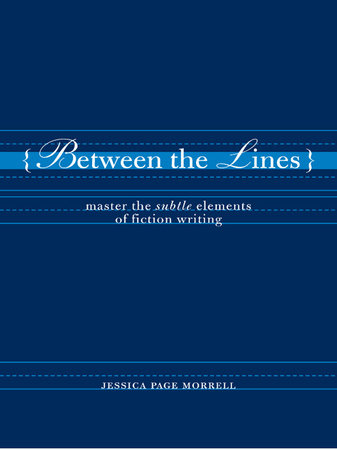
This reminded me of a Flannery O’Connor statement that I quoted in my book Between the Lines:
The beginning of human knowledge is through the senses, and the fiction writer begins where human perception begins. He appeals through the senses, and you cannot appeal through the senses with abstractions.
If you gaze online at her many creations you can see the influences she mentions, but I’m especially curious about how her gatherings infuse her work. She also writes: I hand paint my silks, I collect threads, cord, paper, fabric and collect objects–I’m a bit like a bower bird (only my collection is a kalaidoscope of colours) I create layers of colours and texture, tearing, cutting, twisting, and fraying. I love the way silk absorbs and reflects colour. Each piece evolves as I am making it. I never know what will inspire me to go in a new direction, try some new direction, try some new ingredient, and push myself to experiment with something new. Creating is always exciting, like reading a new embracing book, when you can’t wait to turn the page and the next and the next.
So we’re circling back to writers collecting and noticing. In Between the Lines I’m reminding writers that touch is our most visceral, intimate sense. That layering in touch makes for a more immersive story. I wrote: There is the touch of velvet, like the feel of a newborn’s skin. Or the touch of a velvet cushion in a confessional or a silk scarf draped around a neck. There is a lover’s caress, light or insistent. The harsh bark of certain trees. Lemon juice in a fresh cut. Soft, thick grass under bare feet. Dried, parched grass during a drought. Oysters slipping down the throat. Touch is delicate, touch can scald. Touch is fog blanketing the skin, sand rubbing our toes. Sun baking us a midday. There is no world without touch, no life at all.
Keep writing, Keep dreaming, Have heart
PS Bower birds are chatty, often mimic other species’ songs and calls during mating season, and have a particular habit of collecting objects. Males use these objects to decorate their bowers–hence their name–to captivate and attract females. The pair mates in the intricate bower, but then the female leaves to raise her chicks in a nest. The guy below has blue bottle caps as his draw. Aren’t they fascinating? Oh, and the species has been around 15 million years.

 Yesterday I was awake early and my windows were open as a persistent and melodious birdsong wafted in. It was the false dawn. I’ve long been intrigued by this word pair because not only is it the liminal light that precedes dawn, but it also describes a promising situation that doesn’t come to fruition.
The moon had set and emerging in the east was the false dawn.
The lovers’ promises came to nothing, a false dawn.
The birds sang their hearts out about half an hour before dawn. But then they went silent until the sun rose when they resumed their tunes. Males do most of the singing across the many species. Have you noticed how bright and loud their songs are in the early hours? This is from Kendra Cherry’s great article at childrensmuseum.org: And their singing isn’t always about keeping their rivals out of their territory, sometimes its to bring potential mates into it. Scientists have found that birds songs are most clear in the morning, so it’s a great time for a bachelor bird to flex his pipes and show off his unique tone in hopes of attracting a female.
Fascinating, right? Didn’t you adore the writer’s use of bachelor? Like a little jolt of pleasure? Flex his pipes is fun too. And might I suggest you check out the various meanings of bachelor? I didn’t know it also meant a young knight who serves under the banner of another, did you? But don’t all knights serve under a banner? Have you noticed when you read knight an immediate image came into your mind? I call it the inner movie screen.
This is the Knight of Swords from the Rider-Waite tarot deck–a fascinating, impactful fellow. 
As a writer do you notice the world’s quirks and oddities, large and small fascinations? What do you do with these noticings or wonderings? I keep ideas and gatherings in several places–notebooks, apps on my phone, iPad, and MacBook Air along with a commonplace book on my laptop. Then there are jottings scattered aound on the backs of envelopes and Post-it notes. I lassoo them from time to time so they’re permanently entered into a notebook or commplace book. My comnonplace books cover a season so I’ve recently begun adding gatherings to the Summer 2024 document.
I’ve buttonholed online links in my commplace books, and speaking of buttonholing, I’ve noted the word, and added defintions in my own terms. Why use words like buttonhole? Because a reader can see it, experience it. One person forcing another person to listen. Imagine one person grabbing another to delay a companion. Picture the person leaning into the detainee. This implies importance, doesn’t it? As in hey, wait a minute, I’ve got something important to tell you.
As I write this I’m imagining the crowded hallways of the nation’s capital as Congress threads out from sessions to be greeted by reporters grabbing at them for comment. It’s often a noisy gaggle of media jostling in the soaring, marble-lined hallways. Though the reporter isn’t literally snagging a lawmaker’s suit jacket or elbow to grab their attention, the reporter’s loud question, armed with microphone and cameraperson create the buttonholing.
A few sentences back I’ve used buttonholed to mean capture on a page. Because wordslinging means playing with meaning, sleight of hand manuevers, and just having fun on the page or in speech. Oh, and I just added dungeon vibe to my commonplace book.
Because capture we must. Your writer’s notebook isn’t a place for grocery or to-do lists, though I encourage you to write down your dreams.
But remember, these captures aren’t a final resting place. Ponder. Review. Get inspired. Use word captures in your writing. Create lists. I’ve got lists called Power Words. They’re not only for immediately use, but I’m also collecting them for a book I’m writing about language.
Follow your curiousity. Research birds’ habits at the false dawn. Or how a steam locomotive works. Or a deeper understanding of moon phases. Jurassic-age dinosaurs. Have you always wondered what they ate?
Capturing your ponderings or observations or arrived-in-flash notions plays a vital role in a writer’s practice. May I be so bold as to call it the backbone of the writing life? A habit as important as reading? Because close attention trains your brain, creates new neural pathways. And writers need to captialize on neuroplasticity. {This is a helpful explanation of neuroplasticity.}
Close attention helps you walk in the world as a writer–more hunter than dreamer. Maybe we should make that hunter-gatherer. And that brings to mind another image. I’m picturing a woman of centuries past. She’s wearing rudimentary clothing, has a baby strapped to her back and carries a cleverly woven basket. With her baby dozing peacefully she’s foraging along a verdant hillside–wild onions, berries, kindling, teeth from a dead animal’s skull.
The teeth just popped in my head–I watch a few survival-type shows like Alone (fascinating though sometimes grisly) and Life Below Zero. Programs where humans are operating under sometimes-harsh conditions. Where one false step on soft ice can mean doom. Where people live with hyper awareness–noticing changing skies, caribou migrations, wild foods, and game trails. Where primitive skills can be life-saving.
Let’s not forget reading like a writer in our gatherings. This means you’re reading for pleasure and analyzing the author’s techniques. Then nabbing your findings onto a page. Some of my lists that stem from readers are Word Pairings, Bringing Characters to Life, and Setting Details.
Keep your gleaning basket handy.
keep writing, keep dreaming, have heart
Recommended: If you like documentary films woven like a lyrical tapestry, watch King Coal. A coalminer’s daughters traces the coal industry’s past with the many ramifications to a region, ecomony, and families. A eulogy of sorts.
Information on upcoming online classes will be coming–they’re happening in the fall on Zoom. I’m stoked. Brimming. So much to tell you folks about.

photo by Chris Sharratt
These beauties are harebells after a rain. They’re also called Scottish bluebells or fairy thimbles. And they’re edible. I’m not familiar with them, but grow a larger variety of Campanula, the bellflower. Their peak season is about over in my garden, but I’m going to try coaxing out more blooms.
However, since the harebells are tiny and delicate, I’ll be searching for this variety. Flowers that look like fairies might be hiding nearby are irresistible.
It’s hot here in the Pacific Northwest after a wet, cool weekend. Part of the weekend I spent reading Sin Eater by Megan Campisi. It’s clear she did extensive research although apparently had a difficult time finding many sources. The story begins when May, an orphaned fourteen-year-old is imprisoned for stealing a loaf of bread and is sentenced to be a pariah.
It’s a profoundly unusal and dark, genre-defying tale and alternate Tudor English history. Sin eaters actually existed until about a century ago, and had a gruesome task–to assume the sins of the dying by eating a ritual meal of the foods associated with their wrongful deeds. They also wore a locked brass collar bearing an S, had their tongues tatooed with an S, and were only allowed to speak during deathbed meetings while hearing confessions, called the Recitation. These meals or Eatings brought great comfort to the dying since they were assured a place in heaven, while sin eaters joined the daughters of Eve in a miserable afterlife. Almost all were female.
And it’s an utterly cruel world, especially for women.
Salt for pride. Mustard seed for lies. Barley for curses. There are grapes laid out red and bursting across the pinewood coffin–one grape with a ruby seed poking through the skin like a sliver poking through flesh. There’s crow’s meat stirred with plums and a homemade loaf small and shaped like a bobbin. There are other foods, but not many. My mother had few sins.
Shunned, their lives were lonely and hard. But into this story limps ‘a reeking leper, a peevish cripple, a gabby-goose actor’ who end up living with May in a wretched neighborhood. But the story is also a mystery since people associated with the queen are dying at quite a pace as the religious turmoil of the era also plays a large role.
Naturally I started jotting down words and phrases found in the story as when ‘the sin eater gruffs for a space.’ And, ‘Bring us a light, would you? It’s darker than Eve’s heart in here.’ May’s voice is fresh and intimate and you never forget you’re trailing her in long-ago times: Another old body sits with Old Doctor Howe. A man with a stoop and a merry look in bulgy eyes. When Old Doctor Howe starts to weep with his rememberings, the bulgy-eyed eyed man takes his hand and holds it to his cheek like a mother or goodwife.
Some of my favorite scenes take place amid a festival that includes a play . The revels happen during a foreign emissary’s visit and Campisi has a theater background and it shows. Readers are over peering over May’s shoulder as she watched the elaborate preparations starting with erecting grand tents and bringing in massive quantities of foods for the feasting.
I’m recommending this book because the premise is amazing and the author took enormous risks in writing it and succeeded. And talk about immersive. Oh, and I forgot to mention, May loves to talk.
Keep writing, keep dreaming, have heart
 On Tuesday night I spoke to writers in Portland and while out of practice with public speaking, I returned to the topic of the importance of keeping writer’s notebooks, commonplace books, word lists, and ephemera that inspire. Because sometimes words and visions can appear so fleeting it’s best to capture them whenever, however possible. And then return to them again and again to the self you were when you jotted them down.
Yesterday I was reading this segment of Dorothy Allison’s speech on Lit Hub. She was accepting the lifetime achievement award for Publishing Triangle’s Bill Whitehead Award. Allison talked about being raised poor and desperate and full of self-loathing, some of those hard time’s portrayed in her brilliant novel Bastard out of North Carolina. {Now often found on banned books lists.} But mostly she’s talking about the transformative power of story and how in stories we live forever. “Story is how I understand life.”
Allison:”What if life really was a story? What if we could alter the plot? Assign meaning to the most brutal contempt? Claim passion and glory while walking away from the spit and rage everyone seemed to aim at the poor, the disdain of the well-off and their bland disregard for the not-pretty, the exhausted girl children struggling to be seen as full human beings, the tender soft-eyed boys who wanted what we all wanted–vindication, hope, love and meaning.”
The last line in the segement is: Story is a way out, a way past, a hand in the dark, a whisper of hope, the hope I have for all of us.
Those notebooks I mentioned? I heard Allison speak at a local community college in 2015. Of course I took notes. I’m going to find that note book and return to that spring afternoon.
Keep writing, keep dreaming, have heart