Setting Details Catagorize
Written By: Jessica Morrell
-
Mar•
08•23
 I’ve been sitting in my armchair with my laptop and a cup of Earl Grey watching the sunrise decorate the horizon through Douglas firs. I know the colors I’m looking at have a scientific basis–when the sun is low at sunrise and sunset, sunlight needs to travel farther through more of the atmoshphere than during the day, especially midday. This means that sunlight is refracted and reflected and blue and green are typically filtered out because they have short wavelengths. It’s called scattering and at sunrise, molecules disperse more blue light. This means yellow, red, and orange–longer wavelengths–can paint the sky because they’re not filtered out. Here’s an explanation for this phenomenon.
Mostly, though, I’m pondering how to describe various hues. What to call the delicate pink-apricot-violet palette that’s so fleeting and lovely?
In my previous post I mentioned that setting details categorize fiction. For example, setting in horror will play a huge role because horror needs to terrify the reader. It needs to permeate to create tension, mood, and atmosphere. Along with other story ingredients, it’s used to ratchet up dread in the reader. Setting can foreshadow dangers ahead. That’s why the genre is replete with lonely manors and castles, gloomy alleys and shadowy, creepy forests, crumbling old houses, cemeteries, abandoned amusement parks, mental instituions, swamps, basements, and the vastness of space.
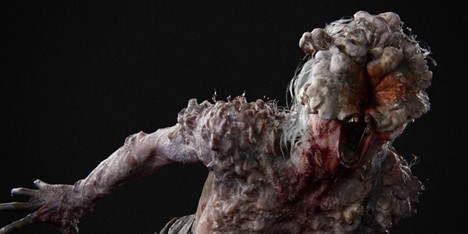 Setting can be as sinister and dangerous as the dystopian, post-pandemic world including the clickers in The Last of Us. {I nominate for one of the most iconic, unstoppable, and dangerous monsters that have come down the proverbial pike in a long time.} I cannot exaggerate the threat that pervades the series. And I’m fascinated that the story is based on a popular video game. I’ve been telling writers how the media landscape is changing, and this adaptation is a good example of this.
And let’s not forget moonless nights, blizzards ala Stephen King’s Misery, thunderstorms, and natural disasters. Cause and effect is at play because roads wash out, forests can be a maze of confusing trails and deadends, and spooky caves {aren’t they all?} can seemito go on forever.
Often setting is the main obstacle in a story. Dystopian fiction uses this a lot along with horror. It’s likely the calvary will not be coming.
Another reason setting plays such an oversized role in horror is that it’s often necessary to isolate or even imprison the protagonist as the crisis reaches a feverish pitch. Because help is not on the way. Instead, feed your readers dark encounters, gasp-out-loud twists, seemingly hopeless odds.
For more on this topic, I’ve written about Dean Koontz’s use of setting to create a spooky, doomed atmosphere in his Jane Hawke series here
I’m going to switch genres now although horror is so useful for illustrating my points. My dad is 92 and lives in a remote region of northern Wisconsin. And he’s an avid reader. I’m one of his suppliers. Books, that is. In this role I’m always looking for suspense series that are similar to Lee Child’s Jack Reacher, along with biographies and fascinating nonfiction.
The next book I’m sending him is Storm Watch by CJ Box. This series features Joe Pickett, a game warden living and operating in the wilds of Wyoming. Notice how his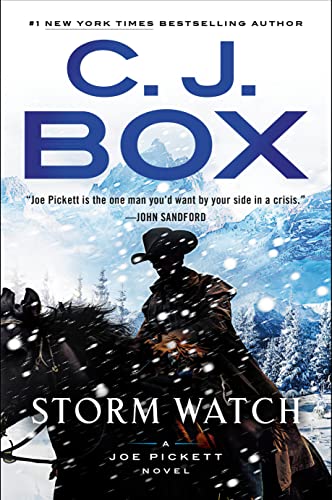 opening paragraphs firmly introduce his job, but also foreshadows a sh**show coming on
Here are the opening paragraphs, showing how setting categorizes.
Late March in the foothills of the Bighorn Mountains wasn’t yet spring by any means, but there were a growing number of days when spring could be dreamt of.
For Wyoming game warden Joe Pickett this was one of those days. This was a day that would both start and end with blood on the snow.
At midday, he climbed out of the cab of his replacement green Ford F-150 pickup and pulled on coveralls and a winter parka over his red uniform shirt and wool Filson vest. He’d had the foresight to layer up that morning before leaving his house, and he was also wearing merino wool long johns and thick wool socks. He pulled knee-high nylon gators over his Sorel pack boots, then placed his hat crowndown on the dashboard and replaced it with a thick wool rancher’s cap with the earflaps down.
On the open tailgate of his vehicle, he filled a light daypack with gear: water, snowshoes, camera, necropsy kit, extra ammo, ticket book, binoculars, sat phone. While he did so, he shot a glance at the storm cloud shrouding the mountains and muting the sun. A significant ‘weather event had been predicted by the National Weather Service for southern Montana and northern Wyoming. Joe didn’t question it. it felt like snow was coming , maybe a lot of it, and he needed to find an injured elk cow and put her out of her misery before the storm roared down from those mountains and engulfed him.
Blood on the snow. Twice.
Layers of winter outerwear
Necropsy kit
Storm cloud shrouding the mountains.
Throw another log on the fire. Those details creep into your veins don’t they? Here’s a preview of the storyline.
By the way, though as a writer I like to write about inky night skies, in reality, night skies are dark blue. The sky is always blue. Thanks for stopping by.
Keep writing, keep dreaming, have heart
Building Storyland, 2
Written By: Jessica Morrell
-
Mar•
01•23
Place matters. With your opening words the setting signals readers that they’ve now entered storyland. Signals readers that a story— part wonder, part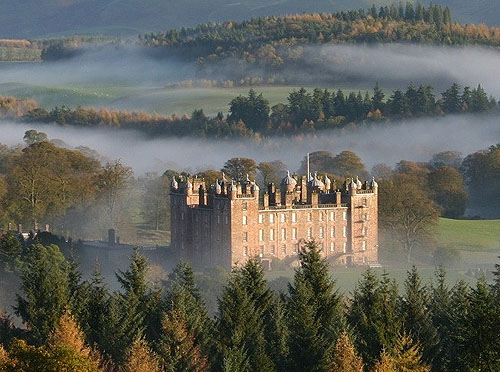 participation located in an ordinary or treasured or troubled realm⎼⎼is unfolding. It means readers will have a place to land and settle in.
And setting helps categorize fiction–urbanfantasy, westerns, Lovecraftian, dark fantasy, high fantasy, magical realism, gothic, horror, police procedural, cozy–the list is long.
Broadly defined, setting is the location of the plot and includes geography, region, townships and cities, neighborhood, buildings, and interiors. Setting also refers to the passage of time, tone and the atmosphere of the story. Place is often layered into every scene and flashback and includes climate, weather, lighting, season, month, day, and hour. Setting and its various moods permeates scenes–because not only the actions and characters’ emotions color fiction.
Your storyworld is not a mere backdrop for action; it can create physical obstacles and saturate fiction with tension, mood, and thematic connotations. And can scare the bejusus out of your readers.
When readers experience the setting via the viewpoint character they feel part of the story. Because readers need to connect to the place–or loathe it–along with your characters.
Writers have endless choices when it comes to creating a story world.
- Real place or imagined place.
- The present, past, future, or a combination.
- City, small town, suburbia, rural areas, forests, deserts, jungles, mountain ranges, grizzly country, seaside village, space or distant planets, or parallel worlds.
- Normal circumstances or highly abnormal circumstances. War, coup, peace, plenty, famine, drought, heat wave, a dystopian nightmare.
- One main setting, multiple settings, road trip, quest. The ‘real’ world merged with a magical world.
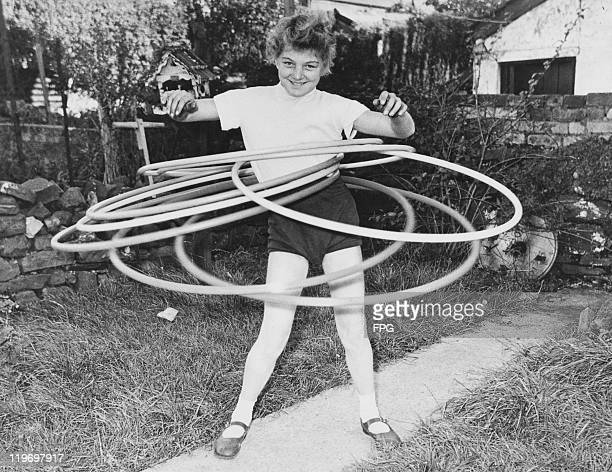
11-year-old Ann Evans of Aberdare, south Wales, the world hula hoop marathon champion
Tip: Choose a setting that fascinates you or has personal connections.
If you’re going to set a novel in a real place, in a real time, your readers deserve ironclad accuracy. If the key scenes in your memoir take place in 1960, acquaint yourself with the main events of that year–the first televised presidential debated, the election of John F. Kennedy for example. Or Elvis leaving the army and the birth control pill was approved. Know the fashions, fads, culture. Did your family embrace TV dinners, salads, hula hoops, and beehive hairstyles? Watch the Ed Sullivan Show? Did your home have TV trays?
Will Scottish history be referenced as it in is Diana Gabaldon’s time traveling Outlander series? If your historical takes place in a drafty Scottish castle in the 1700s you’ll research Scotland’s turbulent history, including Cromwell’s invasion in 1650, the clans associated with the region, and how the fortifications worked. Learn about the Jacobite uprising, James the Pretender, births and deaths of royals, along with major battles. If your story takes place after 1746 and the Dress Act, readers will learn that after their defeat Culloden, Scots were reined in to avoid future uprisings and no longer allowed to wear Highland tartans. The law was repealed in 1782, but if your story takes place during the previous 35 years, animosities might still be running hot. Historical fiction is but one genre where the conflict is rooted in the setting.
Your research will reveal what the laird and lady ate, what was involved in provisioning the household, and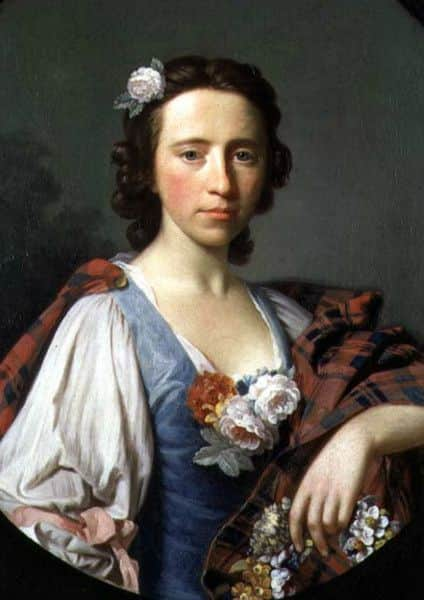 how the seasons affected the household. Stir in alliances, kinships, and trading partners. Add knights, bowmen, stewards, What about cooks, blacksmiths, carpenters, midwives, laundress, candle makers, and weavers? Were the children educated? And what about fortifications? How were goods delivered? Are there kitchen gardens, a distillery, a nearby woods for hunting? What about cattle? Tenant farmers, peasants, and crofters?
Not all your research will end up on the page, but that’s okay. Get it right.
Keep writing, keep dreaming, have heart


Building an Immersive Story World, 1
Written By: Jessica Morrell
-
Feb•
07•23
 Storytelling in its many forms allows readers to enter immersive, dramatic situations, where interesting people tackle intriguing and often harrowing problems. Now these problems can be sordid or heartbreaking or seemingly hilarious–I’m remembering a Sue Grafton novel where PI Kinsey Millhone illegally enters a house and crawls in through a dog door. Not surprisingly she’s greeted by a dog who growls if she tries to stand, so she ends up exploring on hands and knees.
But all the obstacles and troubles must have profound ramifications in your characters’ lives and must be woven into the fabric of the story. In fact, hurdles make up the scaffolding that threads the story together.
Your story world provides context and helps clarify why your characters are fumbling, stumbling, and screwing up as they pursue goals. I see backstory as the lore, the raison d’etre or justification for being. And details weave together that world as obstacles create conflict. {Check out Just Say No here}
Details shade the story with mood and provide an immersive experience.
Readers need to feel like they are living inside a story in the same way that interactive video games bring players into the action. Game playing makes players feel like they are the character they’re playing. Vidoe games feature winds blowing, animal helpers leading the characters to unknown places, and nasty never-before-seen creatures are stalking them. This means gamers are problem solving as they play along in their assumed identities. And gaming is your competition these days. Because readers want experiences.
This means intimate details need to be as precise and sensory as real life even though, of course, it’s all artifice. Even if your fictional world is untethered from our everyday world, as in fantasy and science fiction, contemporary readers expect cinematic elements on each page and plots and characters molded by the place they come from.
However, setting or world building isn’t achieved by injectig descriptions or details as if they’re steroids or additives. Nor are they mere sprinkles on top of cupcakes.
Give it meaning. Make your details purposeful. Description isn’t filler. Description creates emotions as it anchors story worlds.
As I write this it’s a soggy evening, fog shrouding the nearby looming Douglas firs. Rain is in the forecast for tomorrow and you can smell it, feel it coming. Indoors a nearby lamp is glowing pale amber and the smells from tonight’s Vietnamese shrimp soup are in the air. I’m wearing black yoga pants and a lavendar cableknit turtleneck. My furnace just kicked in with a soft whoosh. The chair I’m sitting in has embossed leaves and stems, the silk fabic buttery. {Impossible to keep clean with regular use.} I’m sitting cross legged.
So that’s a bit of the background of my evening. It’s cozy in here. If this was fiction it would be a setup for disruption and threat. If a stranger banged on the door leering in through the window, or I heard a high-pitched terrified scream, or I clicked on a website and learned I’d won a fat lottery,then these details could have meaning. Then the disruption feels more profound.
 Create characters who walk, talk, laugh, and ache like people in real life do. This means you’re writing characters as real as your friends, neighbors, coworkers, and family. You already know that characters are the beating heart of every story, but the next step is to create a vivid authenticity.
Get your hands dirty. Eat, sleep, walk with, shop with, tangle with your characters. Readers should be able to smell them, hear them, know the texture of their hair, skin, clothing. The lilt or jangle of their voices. Dress them with care.
Fiction is intimate because readers want nearness, familiarity, proofs. And you want to create narrative intimacy or deep connections between characters, even between foes for added tension and threat. Similarily you want tight connections between reader and protagonist. It all starts with intimate knowledge.
Details create connections and the human brain adores connections. Past and present colliding. Sisterly and brotherly connections. Morher and child. Father and child. Teachers and students who learn from each other. Generational scars.
To be continued
Keep writing, keep dreaming, have heart
There is one thing you should know about writing…
Written By: Jessica Morrell
-
Feb•
07•23
There is one thing you should know about writing. It will inevitably lead you to terrible places, as you cannot write about something if you have not lived it. Though the most important thing to bear in mind is this: you are there as a tourist and you must remain one. There was a very specific reason why you were blessed with the ability to translate your sentiments into words–it is to bring a voice to suffering and torment. But do not be too indulgent with your experience of these things–despite how addictive suffering can be–how easy it is to get lost down the twisted path of self-destruction. You must emerge from adversity , scathed but victorious–to tell your story and in turn, light the way for others. ~Lang Leav
Writing is
Written By: Jessica Morrell
-
Jan•
26•23
Writing is the mineshaft to the soul. ~ John Baird
Goblin Mode and other Gems
Written By: Jessica Morrell
-
Jan•
22•23
I’m always collecting word gems, aren’t you? Do you keep an active word list to update and refresh your vocabulary?
The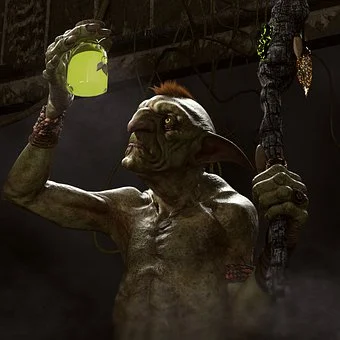 first Word of the Year voted by the public for the Oxford Dictionary is goblin mode. As you might guess, goblin mode is not an attractive state of being. Think slothful and freeing.
The annual word is usually based on ‘useage evidence,’ but this year a vote was used, though it was limited to the top three words and beat out #IStandWith and metaverse. Am I the only one who hadn’t heard of it before?
Here’s a great piece by Caleb Madison in The Atlantic that calls it ‘gloriusly evocative phrase that tells a concise story about how many of us are doing these days’. And Madison uses goblinesque. Then goes on to explain more about goblins such as how they like to hang out in cozy places and how the COVID pandemic led to um, gobinesque behaviors. I now have a sincere crush on him.
And since I cannot stopper my pleausure at the voters’ choice, here’s The New York Times delightful piece on goblin mode. Jennifer Schuessler makes the point that gaming is influencing language. Ahem. She also references how Merriam-Websters Word of the Year for 2022 was gaslighting, though might I add they seem late to the party with this one. Don’t you agree?
Most recently added to my list:lip-worshiper, wangle, hoodwink, killjoy, earlywood, latewood, wuffle, dog-hungry, paucity, gruntled, drubbing
Keep collecting out there….because writers are scavengers