Word by Word

Practical insights for writers from Jessica P Morrell

Prepping for NaNoWriMo–Follow the Yellow Brick Road; or start with a one-of-a kind, unstoppable character

Written By: Jessica Morrell - Oct• 26•18

It’s raining here, but we’ve had the most glorious spate of Indian Summer weather and the amber, lemon, and copper colors continue to bejewel the trees. I’m cleaning up the yard, moving plants, and planting bulbs. And hallelujah, I’m back to cooking hearty food–soups, stews, and a big batch of Beef Bourguignon and mashed potatoes that made me happy to be alive though I still haven’t stepped on the scale.

With November fast approaching thousands of writers are prepping for NaNoWriMo, or National Novel Writing Month. It’s a mad sprint, penning 50,000 words of a story at a frenzied speed while part of a writing community.

If you’re wise you’re already making plans for this mighty effort. I recommend a deep house or apartment cleaning and stocking the pantry and freezer. Stock plenty of protein-rich dishes ready for the days ahead. The kind you can simply thaw or nuke.  What else keeps you going? Perhaps chocolate, apples, snacks, nuts, coffee, tea, bottled water, and rewards like an outing that inspires for milestones achieved.

Buckle Up

During the last weekend in October, I also recommend that you get acquainted with your protagonist before you plunge into writing a new novel. It’s simple really; if you get acquainted with him or her beforehand, the story will unspool with more ease and speed. Because what the protagonist wants/desires and fears the most (the dreaded alternative) will be at stake in the story.

Now, it’s likely that the protagonist’s needs and goals will shift and grow throughout the story, but you need a starting point of need and imbalance. While you begin with basic dynamics of storytelling, by the time the conflict heats up and things are really hairy, you’ll understand your protag’s reactions and next steps.

In fiction a main character’s needs and motivations create goals.  The protagonist’s goals will meet with opposition from the antagonist or another force. The protagonist will struggle to overcome the obstacles. These struggles create conflict and conflict fuels the whole shebang.

  • Goals matter. They define fictional characters from Woody from Toy Story to Dorothy Gale in The Wizard of Oz to Atticus Finch in To Kill a Mockingbird.
  • Follow the Yellow Brick Road: Goals are tied to dramatic structure and prevent your characters from being merely reactive.
  • Stories are about problems. Goals help solve those problems.
  • Fictional characters who are also heroes and heroines are unstoppable;  don’t give up even though thir goals seem impossible.
  • Goals provide action, drive stories.

Katniss Everdeen: Her dogged path to greatness began the day of the Reaping when she steps in to save/protect her sister Primrose  from taking part in the annual and deadly Hunger Games. Leaving home with Peeta, the other Tribute from District 12,  she plans to somehow stay alive in the deadly Hunger Games  because if she dies her mother and sister will not be able to survive without her. Along the way, she trains, forms an alliance with Peeta,  collects allies and enemies, and ultimately fights to protect Peeta’s life too. By story’s end their examples show how remaining true to your principles is most important of all. But never forget that she was also flawed, vulnerable, and misunderstood. In othe words, complicated and relatable.

“Katniss Everdeen’s name booms through me like a firework,” Dhonielle Clayton, author of “The Belles” and chief operating officer of We Need Diverse Books, a nonprofit organization. “A bright reminder of what’s needed to change the world: defiance, irreverence, and stubborn determination. I need to read books by girls like her, girls who weren’t so nice, girls so angry their  rage could topple anything in thier path; girls who could face the dark; girls who never could be contained.”  The New York Times
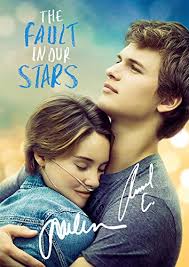
Hazel Lancaster in The Fault in our Stars by John Green: Teenaged Hazel has been dealt a lousy hand, thyroid cancer that has metastasized into lung cancer. Her first goal, to please her mother, is accomplished when she attends a support group for kids with cancer. At this meeting she makes friends with Augustus Waters who becomes her first love.

She introduces Augustus to her favorite novel about a girl with terminal cancer and explains she wants to meet the author and understand what really happened to his family. You see, the motivation that drives Hazel is that she needs to believe her parents will be okay after she dies. (spoiler alert)  Along the way Hazel and Augustus travel to Amsterdam and meet the author, lose their virginity, and Hazel realizes how much she wants to live.

But Augustus has been hiding a horrible truth: his cancer has returned and he has little time left.  Quite a plot twist, isn’t it? Now Hazel needs to somehow support him, cherish their last days together, then handle her grief all the while coping with her own terminal diagnosis. She comes to understand what being a survivor means and that life has meaning no matter what stage you’re at. And she comes to feel more peace about her parents, especially after she learns her mother has been getting a degree in social work.

Luke Skywalker: Skywalker of the Star Wars  sci-fi series is a freedom fighter from humble beginnings.  His path (and character arc) begins with a restless need to escape his dead-end existence on his uncle’s barren farm. He learns that Princess Leia is leading a rebellion against the Empire and wants to join. He longs to become a Jedi Knight, or fighter pilot especially after Obi-Wan Ben Kanobi, a desert hermit,  informs him that his father was a Jedi fighter and he has the ability to harness the Force.

Still reluctant to leave his family, his mind is made up for him when Imperial stormtroopers savagely murder his aunt and uncle. He’s all in now. Skywalker begins training with Hans Solo, then learns the princess has been captured. His next goal is to rescue the princess, which he accomplishes with more than a few swashbuckling moves. This sets up his final, seemingly hopeless goal of taking out the Death Star and ultimately saving the Rebel alliance.

Notice how all these protagonists’ goals powered the story?

Getting to know you….

So how are you going to get acquainted with your protagonist? There are lots of questionnaires available online to create a physical presence and backstory. I’ve got one here amid my cheat sheets.

But it seems to me that walking along or imagining characters as  if they’re with you, their creator,  can be one of these best methods of getting to know someone. Especially if you want to learn what makes them tick. Or in fiction speak, their motivations.   Motivations stem from a character’s past, basic nature and personality, and compelling circumstances.

Let’s repeat: Motivations create needs which create goals which fuel conflict = story.

Just try it. Step outdoors and plan to walk for at least a mile with your invisible pal at your side. Or walk along as if you’re a method actor and you’re operating from within the character.  What would your character notice or remark on? How does he/she hold his/her body? Fast walker? Ambler? Quiet? Hates exercise? Feels most alive when moving? What’s on his or her mind? Distracted or preoccupied? Impatient? Enjoying the weather?

You know those moments in life when you’re walking along with a friend and a profound truth slips into the conversation? Maybe it’s a tidbit or a bombshell or sharing a long-ago memory. We all have wounds and triumphs and failures; and they’re often twined to a character’s internal goals and secrets.  Those are the moments, the gold you’re searching for.

And although time is short with November looming, how about a short road trip with your character riding shotgun? Or can he or she tag along when you’re running errands or chauffering the kids around?  Have you ever noticed how some people are a delight to travel with and some people are a nightmare? Which one is your protagonist? A nervous, watchful traveler? Open to adventure? Afraid of the unknown? Chatty? Reticent?

Shaping your protagonist’s goals

  • What’s wrong or not working in his/her current situation?
  • What about emotional needs or baggage from the past? In other words, what’s screwing up  your character?
  • What first, clear-cut action step can the protagonist take toward his/her goal? Remember, a protagonist’s goals work best if they’re relatable, visible, and barely achievable. Side note: some of a character’s goals will remain ‘invisible’ since they’re inner, emotional, personal growth goals.
  • What is the inciting incident that first thrusts your protagonist from his or her ordinary life towards toward that first goal? An example of the inciting incident is Prim begin chosen to participate in the Hunger Games and Hazel reluctantly joining the support group for kids with cancer.

Keep writing, keep dreaming, have heart

And thanks for stopping by


Walt Whitman on the secret of writing

Written By: Jessica Morrell - Oct• 23•18

The secret of it all, is to write in the gush, the throb, the flood, of the moment–to put things down without deliberation–without deliberation–without worrying about their style –without waiting for a fit time or place. 

I always worked that way. I kept the first scrap of paper, the first doorstep, the first desk, and wrote, wrote. No prepared picture, no elaborated poem, no after-narrative, could be what the thing itself is. You want to catch its first spirit–to tally its birth. By writing at that instant the very heartbeat of life is caught.  ~ Walt Whitman


Fiction Mastery workshop December 1 in beautiful Manzanita, OR

Written By: Jessica Morrell - Oct• 17•18

No matter where you’re at in your writing career, this workshop will give you insights that create a more nuanced, polished, and compelling story. And it takes place at the Hoffman Center in Manzanita, one of the most charming towns on the Oregon coast. You’ll find the details for payment and registration here.

 Crafting a novel is a long, difficult slog even for the most experienced writers. So many decisions and choices, so much fine tuning and revising. Here’s some help: A three-part workshop of specialized techniques for creating a deep, vibrant, and unified story that immerses readers into a vivid world with believable and fascinating characters. The session includes hands-on exercises to help you identify your strengths and weaknesses.

Part 1: Deep viewpoint

What is the key to creating emotional connections between your readers and your characters? It’s deep viewpoint, the sense that readers are immersed in a character’s life and dilemmas. In fact, the reader becomes the character.  We’ll discuss and practice how to eliminate distance, how to dramatize true-to-life emotions, and how to develop an authentic voice.

Part 2: Subtext: The river of emotion beneath the story

Life is often lived between the lines, and scenes often simmer with unspoken emotions beneath dialogue and action. In this session subtext will be explained with examples from various genres. We’ll  discuss nonverbal communication and how to render it onto the page and how to hint at lies and secrets in scenes. We’ll investigate various methods to insert subtext—innuendo, gestures, pauses, misdirection, colors, clothing, setting details—in other words, the nuanced moments that are not directly represented.

Part 3: Tension on every page

Fiction isn’t written to make readers happy. Its purpose is to jangle their nerves, make their hearts race, give them goose bumps, and disturb their sleep. We’ll explore the recipe for tension that jabs at the reader’s senses creating a force field and underlying every scene.  We’ll discuss how to worry readers by using language, peril, discomfort, prolonging dread, cliffhangers, fish-out-of-water scenarios, time running out, and other elements. Space is limited and reservations required.

November 3, 2018

Hoffman Center, Manzanita, OR

9:30-4:30

$99 Contact Hoffman Center for payment


For what it’s worth; it’s never too late from F. Scott Fitzgerald

Written By: Jessica Morrell - Oct• 09•18

For what it’s worth; it’s never too late, or in my case, too early to be whoever you want to be. There’s no time limit, stop whenever you want. You can change or stay the same, there are no rules to this thing. We can make the best or the worst of it. I hope you make the best of it. And I hope you see things that startle you. I hope you feel things that you never felt before. I hope you meet people with a different point of view. I hope you live a life you’re proud of. If you find you are not, I hope you find the courage to start all over again. ~ F. Scott Fitzgerald

300 new words in Scrabble dictionary

Written By: Jessica Morrell - Oct• 05•18

English is an ever-evolving and vital language. Influenced by  everything from hip hop to high tech  to Facebook, it reflects an ever-evolving culture. Proof: Merriam-Webster has just published the sixth edition of The Official SCRABBLE Players Dictionary updated with 300 new words. It seems to me that in the Scrabble world that’s a lot. Some of them like yowsa, ew, and ok seem like no-brainers. Others like facepalm, emoji,  bitcoin, hivemind, beatdown, and listicle attest to how times are a-changing, wouldn’t you agree? Then there’s frowny, an old word brought back into common usage. I plan to start using it. Find more information about the new words including 106 two-letter words here.

Keep writing, keep dreaming, have heart

October

Written By: Jessica Morrell - Oct• 02•18

Quick take: secondary characters need to shine

Written By: Jessica Morrell - Oct• 01•18

Treat all your secondary characters like they think the book’s about them.” ~ Jocelyn Hughes


Writers can Change the World

Written By: Jessica Morrell - Sep• 29•18

Every time I leave home more autumn colors are blazing and flaming, transforming the countryside. A few times when I was in my car on back roads I just wanted to keep driving into the changing light. Like millions I watched the Kavenaugh hearing this week and like many millions I joined the important conversations about sexual assault and who belongs serving on our federal courts. With my thoughts spinning and my mood pingponging, I’ve started writing down ideas and memories, trying to shape my experiences into a meaningful contribution.

Jeff Flake listens to assault survivors demanding to be heard

I’ve also been so heartened by activists demonstrating, citizens marching, phoning, writing, and visiting their representatives. Americans are becoming engaged and taking our roles as citizens and global citizens seriously. While this difficult process unfolds, a midterm  election is fast approaching. There’s so much you can do to contribute, to help candidates and causes you believe in. If you cannot travel to embattled states or districts, you can  make phone calls, you can contact representatives, and you can write and get out the vote via postcardstovoters.org. It has all the how-tos you’ll need including templates you can download and inspiring examples. I’ve been buying the plain, pre-stamped cards at my post office and these days I’m sketching in blue waves.


Word of the day: glean

Written By: Jessica Morrell - Sep• 25•18

The Gleaners, Jean-Francois Millet 1857

GLEAN: Original meaning was to gather grain left behind by reapers after the harvest (Middle English). These days it has come to mean gathering information or other resources bit by bit, with some effort or to gather gradually.

With thanks from Robert MacFarlane.

Keep writing, keep dreaming, keep collecting words

Word by Word: Is Anglo-Saxon the answer?

Written By: Jessica Morrell - Sep• 13•18

We had our first significant rain since June on Tuesday and yesterday a rattling, loud downpour smashed down along with thunder and lightning and made you grateful for your roof. Phew. As you can imagine, nothing is more welcome during wildfire season. I’ve also got friends and family in the path of Hurricane Florence, so like many people, I am weather-obsessed these days.

I’ve been working on projects about the tools of writing–solid nouns, words that resonate, verbs that power sentences. As I’m working I’m scribbling and underlining in every novel and article I read, analyzing authors’ techniques, and building words lists. My idea of fun. And I’m reading a translation of Beowulf by Seamus Heaney. Beowulf was written in about the eighth century and it’s been years,  make that decades, since I tackled it.  Back then when my eyes were younger I read the original. The basic story is about a hero defeating three monsters and then dying. Heaney’s translation is laden with footnotes, printed in small typeface, contains photographs, and essays written by experts.  Next I’m hoping to compare it with Tolkien’s translation and reread The Canterbury Tales because I want to wallow in Old English.  Well, actually Chaucer lives in the fourteenth century so his language is called Middle English.

Since I began teaching I’ve been advising writers to lean on words of Anglo-Saxon origin, but lately I’ve been revisiting this concept. One problem with this advice is that there aren’t that many of these words still in use.  The English language, or Old English, originated from Germanic tribes in northern Europe who invaded Britain between the fifth and seventh century. It was mostly a spoken language and Britain was populated with Celts though Roman influences still lingered. The Anglo-Saxon impact lasted about 600 years. The  Vikings raided and settled in parts of England and brought Old Norse, also a Germanic language, between the eighth and eleventh century.

The Norman Conquest  in 1066 and the conquerors brought William as king and Old French.  French is a romance language with roots in Latin and borrowings from the Greeks. It was also called Romance English. Old French began dying out in England and was replaced by Middle English from about 1100 to 1500.

English has always been an adaptive, vital language and was influenced by the King James Bible, the Renaissance which flooded the language with new words, and Shakespeare, who added more than 4,000 words and phrases. Modern English and American English in particular  resulted from borrowings, gleanings, and adaptations–a mongrel language. Which is one reason why you’ll find a list of synonyms for many words.

But words of Anglo-Saxon origin have always been considered more down-to-earth and concrete. They’ve also been considered more working class, crude, and simple.  Words of French (and Latin) origin are considered softer, elevated,  elegant and sometimes pompous. For example:

Anglo-Saxon                            French

  1. gut                                         intestine
  2. fire                                         flame
  3. ghost                                     phantom
  4. buy                                        purchase
  5. earthly                                   terrestrial
  6. stench                                   odour
  7. heaven                                  celestial
  8. wild                                       savage

So how is a writer to choose? Generally opt for punchy, potent, and plain diction. Old English makes readers pay attention. It is typically literal as in ‘bone house’ for the human body. Or ‘whale road’ as one word that describes the sea.  Anglo Saxon words are leaner, single syllable words that are:

  • terse
  • easier to read
  • punchier
  • less formal
  • ‘of the body’

Examples: blood, sweat, tears, toil, stone, wood, bless, wish

French and Latin words are usually

  • formal
  • more abstract
  • harder to read
  • multisyllabic
  • ‘of the mind’

Examples: Excrement, intercourse, cogitate, enquire, imbibe

But, and this is an important but; it all depends on voice, tone, and purpose. Is your viewpoint character a professor or modern-day Huck Finn?  Is  your character 55 or 12? Are you writing for kids or adults? Humorous tone or deadly serious?

Rely on Anglo-Saxon if you’re writing: picture books, YA, humor, adventure, thrillers, fantasy. Use it when you want to reveal emotions and get into your character’s body.

Rely on French or Latin origin words if you’re writing: romance (cherish, desire, infatuation),nonfiction, science fiction (alien, dystopia, alchemy) technical writing and documents.

It’s always helpful to know a word’s etymology. And you’d be silly to omit the offerings of Yiddish (chutzpah, glitch, schmooze), Italian ( facade, vista, replica, bizarre) or Old Norse (dazzle, ransack, berzerk). So many treasures, endless tools.

Keep writing, keep dreaming, collect words

Bonus: A link to the prose style of George R. R. Martin.

Fun bonus: From The Guardian, writers on words they love best.